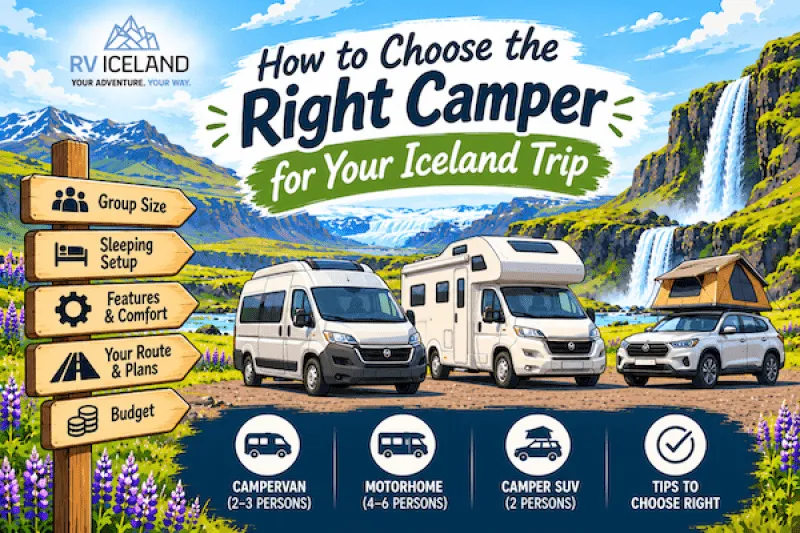
How to Choose the Right Camper for Your Iceland Trip
Compare Iceland campervans, 4x4 campers and motorhomes. Find the right vehicle for your route, group size, season and budget with RV Iceland.
Choosing the right camper for Iceland is about more than picking the vehicle with the most beds or the lowest daily rate. Your ideal camper depends on where you plan to drive, how many people are traveling, the season, how much interior space you want, and whether you plan to explore Iceland’s Highlands and F-roads.
From compact 4x4 campers with rooftop tents to fully equipped motorhomes with kitchens, bathrooms, and sleeping space for larger groups, there are options for every type of Iceland road trip. Use this guide to compare camper types and find the vehicle that matches your route and travel style.
Why Explore Iceland with a Camper?
A campervan is a great way to travel Iceland because it combines transportation and accommodation in one vehicle. Instead of checking in and out of hotels every day, you can follow the weather, spend more time at the places you enjoy and build more flexibility into your itinerary.
Renting a campervan in Iceland also gives you access to an extensive network of campsites around the country. For many travelers, this makes a camper a practical way to experience Iceland while keeping the freedom of a self-drive holiday.
Accommodation on Wheels
Accommodation can be one of the larger expenses of an Iceland holiday, particularly during the busy summer season. Hotels and guesthouses in popular areas can also become difficult to find at short notice when demand is high.
With a camper, your bed travels with you. You can plan your days around the landscape and the weather rather than changing accommodation every night. However, a camper does not mean you can simply park and sleep anywhere: overnight stays with campervans and motorhomes generally need to take place at designated campsites unless you have explicit permission from the landowner.
This combination of mobility and campsite access gives you considerable freedom. You can spend the afternoon exploring a waterfall, glacier lagoon or coastal village and then continue towards your next campsite when you are ready.
Freedom & Flexibility
Iceland's weather and road conditions can change quickly, so flexibility is valuable on a road trip. A camper allows you to adjust your daily route, stay longer in places you enjoy and avoid committing to a rigid hotel-to-hotel itinerary.
Long summer daylight hours make this especially useful. You can visit popular attractions early or late in the day, when they may be quieter, while keeping your accommodation close at hand.
Budget Value for Road Trippers
For couples and small groups, combining transport and accommodation can make a camper an attractive alternative to booking a rental car and separate accommodation every night. You can also prepare many of your meals yourself rather than eating out for every meal.
The overall cost depends on the vehicle, rental dates, campsite fees, fuel, insurance options and your travel style. During peak summer, camper rental rates and campsite demand can be higher, so comparing the complete trip cost is more useful than looking at the vehicle price alone.
Choosing the Right Camper for Your Icelandic Road Trip
The right camper depends primarily on your route and priorities.
A compact 2WD campervan or motorhome can be well suited to the Ring Road, Golden Circle and other paved or approved gravel routes. If your itinerary includes Iceland's Highlands and F-roads, you need a vehicle that is specifically approved and equipped for those roads. Always check the individual vehicle before booking.
When comparing what type of camper van to rent, consider:
- Where you want to drive: Ring Road and major attractions or Highlands and F-roads?
- How many people are traveling: Two people have very different space requirements from a family of six.
- When you are traveling: Summer and winter require different considerations.
- How much interior comfort you want: A rooftop tent maximizes mobility, while a motorhome provides living space indoors.
- Whether you want an automatic or manual vehicle: Transmission can make a noticeable difference to driving comfort.
Route & Terrain: Where Are You Driving?
Your planned route should be one of the first things you consider when choosing a camper in Iceland. Not every vehicle can be driven on every road.
Ring Road & Golden Circle: Driving on Paved Roads
For the Ring Road, Golden Circle and most major tourist routes, a 2WD campervan or motorhome can be a practical choice. Route 1 is paved, and many of Iceland's best-known attractions are accessible via paved or approved gravel roads.
A larger motorhome can provide more living comfort, while a compact campervan can make parking and maneuvering easier. For a typical Ring Road trip, you generally do not need a 4x4 solely because you are traveling around Iceland.
Always check current road and weather conditions before setting out, particularly outside the summer season.
The Highlands & F-Roads: When 4x4 Is Legally Required
If your itinerary includes Iceland's Highlands, check whether your route contains an F-road. F-roads are mountain roads, and a suitable 4x4 vehicle is legally required where 4x4 access is specified.
A 4x4 does not automatically mean every Highland road is suitable for every vehicle. F-roads can vary considerably in terrain, river crossings, surface conditions and difficulty. Some roads may also be closed depending on the season and conditions.
Check road conditions and opening information before driving into the Highlands, and follow the rental company's restrictions for your specific vehicle.
Gravel Roads & Undercarriage Protection
Gravel roads are common in Iceland, including on routes away from the main Ring Road. Driving on gravel requires lower speeds, greater following distances and extra attention to loose stones.
Ground clearance, tires and vehicle construction can make a difference when traveling on rougher surfaces. It is also important to understand what roads your rental vehicle is permitted to use and what insurance protections apply to gravel, tires, windscreen and the vehicle's underside.
Vehicle Types Explained
Iceland camper rentals can broadly be divided into three categories.
4x4 SUV campers with rooftop tents prioritize mobility and access to suitable Highland routes. They are particularly appealing to couples, solo travelers and adventurous road trippers.
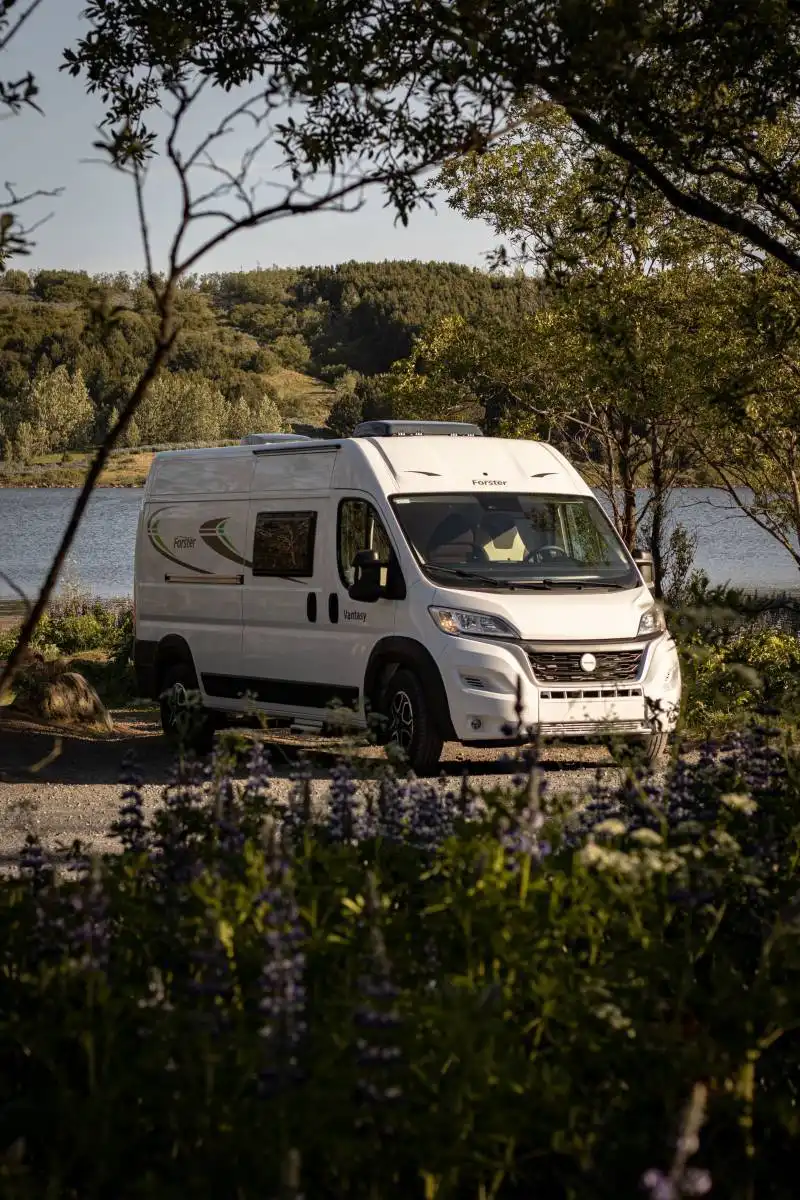
Compact campervans offer a balance between driving convenience and basic sleeping/cooking facilities. They are well suited to travelers who plan to spend most of their time on the Ring Road and other accessible routes.
Motorhomes prioritize interior living space and comfort. Depending on the model, they can include a kitchen, heating, bathroom, shower, toilet and sleeping arrangements for several people.
The best choice depends on whether you value off-road capability, compact dimensions, interior comfort or a combination of these factors.
4x4 Roof Tent SUVs
A 4x4 SUV with a rooftop tent is a strong option for travelers who want to explore suitable Highland routes while keeping their vehicle relatively compact. The elevated sleeping area also gives you a camping experience without requiring a large motorhome.
For travelers planning F-road adventures, explore RV Iceland's 4x4 camper rental options and check the specific vehicle's road permissions before booking.
Compact 2WD Campervans
A compact 2WD campervan can be a practical choice for travelers who want a simple, mobile setup without the size of a full motorhome. These vehicles are particularly suited to paved roads, the Ring Road and many popular tourist routes.
They can also be easier to maneuver and park than larger RVs, which is useful when navigating towns, campsites and narrow roads.
Class C RVs
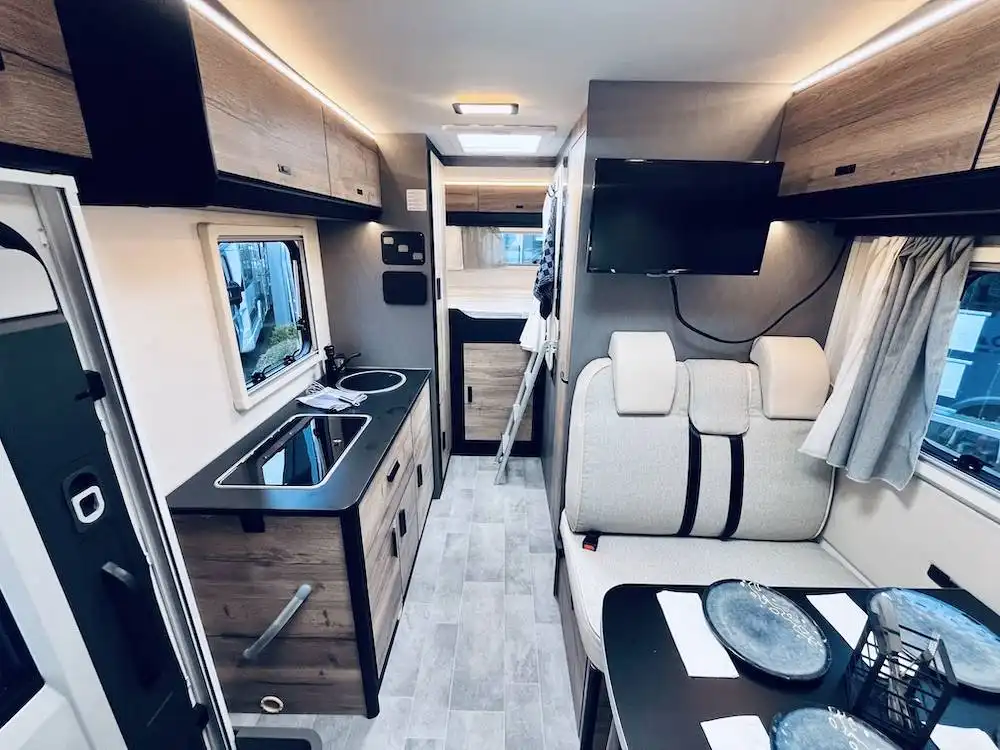
Motorhomes are designed for travelers who want more living space and greater comfort during longer road trips. Depending on the model, you can have an indoor kitchen, dining area, heating, bathroom, shower, toilet and dedicated sleeping areas.
For families and groups, the extra interior space can be particularly valuable when Iceland's weather makes spending time outdoors less appealing.
Living Space & Group Size Considerations
The number of people traveling should directly influence your choice of vehicle. A compact two-person setup can be comfortable for a couple, but a family of four or six will benefit from more dedicated beds, storage and indoor living space.
Think about how much time you expect to spend inside the vehicle, not just how many people it officially sleeps. A vehicle that comfortably accommodates your group can make a major difference on rainy or windy days.
Solo Travelers & Couples
Solo travelers and couples have the widest range of options. A rooftop tent SUV provides mobility and a straightforward camping setup, while a compact motorhome offers additional indoor comfort.
For couples who want a private bathroom, kitchen and heated living area, a small motorhome can be particularly convenient.
Families & Groups of 4–6
Families and larger groups generally benefit from a motorhome with multiple sleeping areas and more interior space.
Depending on the model, RV Iceland motorhomes offer sleeping arrangements for between two and six people. Larger models can provide features such as a kitchen, dining area, shower, toilet, heating and multiple sleeping areas, reducing the need to rely on campsite facilities for every part of your daily routine.
For families, also consider storage space, seat configuration and how easily everyone can move around inside the vehicle.
Standing Height vs. Pop-Top Living Space
A rooftop tent gives you a comfortable sleeping area while keeping the vehicle compact, but your living space is primarily outdoors.
A motorhome with standing interior height gives you somewhere to sit, cook, eat and relax when the weather is cold, rainy or windy. If you are traveling during shoulder seasons or winter, this difference can become especially important.
Seasonal Factors: Winter vs. Summer Camping
Iceland changes considerably with the seasons, and your choice of camper should reflect the conditions you expect to encounter.
Summer brings exceptionally long daylight hours and the midnight sun, while winter has much shorter days and can bring snow, ice, strong winds and temporary road closures. Campsite availability also varies by season, with many campsites operating seasonally and a smaller number remaining open during winter.
Road Capability & Drivetrain
For summer trips focused on the Ring Road and major attractions, 2WD vehicles can be suitable. If you intend to travel on F-roads when they are open, choose a vehicle specifically approved for those routes.
In winter, drivetrain is only one part of the equation. Weather forecasts, road conditions, tires, daylight and your own driving experience all matter.
Insulation & Heating Systems
Heating becomes particularly important when traveling outside the warmest part of summer. A well-insulated motorhome with a reliable heating system provides a much more comfortable indoor environment when temperatures drop.
RV Iceland's motorhomes include heating systems, with individual vehicle specifications varying by model.
Daylight & Driving Windows
Summer's long daylight hours allow for flexible sightseeing and longer driving days. Around the summer solstice, Iceland can have daylight throughout the night, making blackout curtains particularly useful when sleeping.
Winter is the opposite. Limited daylight means you need to plan your driving more carefully and allow additional time for changing road conditions.
Wind Resistance & Vehicle Profile
Strong winds are an important consideration when driving in Iceland. Larger, taller vehicles can feel different in crosswinds than compact cars, while rooftop tents add height to an SUV.
Regardless of vehicle type, always slow down when conditions become windy and follow local weather and road warnings.
Bathrooms, Showers & Cooking Amenities
One of the biggest differences between a rooftop tent, compact campervan and motorhome is the level of onboard facilities.
A simple camper may require you to use campsite showers and kitchens, while a motorhome can give you a private bathroom, shower, kitchen, refrigerator and water system.
Consider your preferred balance between independence and vehicle size before booking.
Do You Really Need an On-Board Toilet and Shower?
For short summer trips, some travelers are perfectly comfortable using campsite facilities. For longer trips, winter travel or family holidays, an onboard bathroom can be a major convenience.
A private shower and toilet also mean less dependence on campsite opening hours and facilities. RV Iceland's motorhome models include different combinations of bathroom and shower facilities, so check the specification of your chosen vehicle before booking.
Utilizing Iceland’s Campsite Facilities
Iceland has a well-developed network of campsites, many of which offer toilets, showers, cooking areas, waste disposal and other useful facilities. However, services vary from one campsite to another, particularly outside the main summer season.
Even if your motorhome has its own bathroom and kitchen, campsites remain an important part of traveling responsibly and legally around Iceland.
Indoor Kitchens vs. Portable Stove Setups
An indoor kitchen can make a big difference when the weather is cold or wet. Motorhomes typically provide more counter space, storage and cooking equipment than a rooftop-tent setup.
If your vehicle has a simpler cooking arrangement, you can still prepare practical meals on the road with a portable stove and basic equipment. For ideas and practical tips, see our guide to campervan meals.
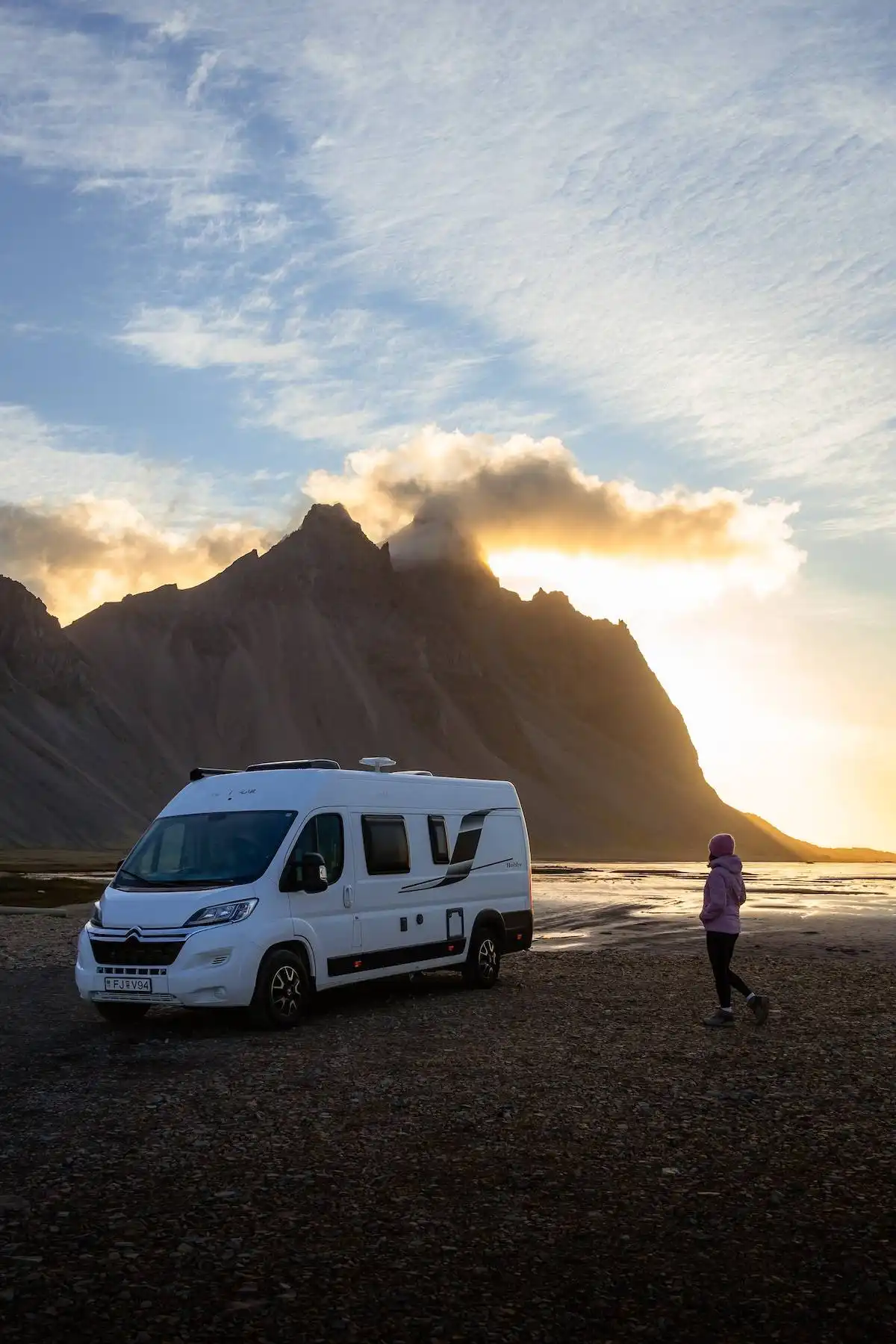
Transmission & Driving Comfort
Transmission is another factor worth considering when choosing your Iceland rental. Manual vehicles can be a good choice for experienced drivers who are comfortable shifting gears, while automatic vehicles can reduce workload during long days behind the wheel.
Manual vs. Automatic Transmission
Manual transmission vehicles are common in Iceland and can provide useful control on changing terrain. Automatic vehicles, meanwhile, can make driving more straightforward, particularly for travelers who normally drive automatic cars at home.
If you prefer automatic transmission, explore RV Iceland's automatic campervan rental options. Always check the individual vehicle specification before booking.
Fuel Efficiency & Fuel Cost
Fuel is an important part of your road-trip budget. A compact camper or SUV generally uses less fuel than a larger motorhome, although actual consumption varies with vehicle, driving style, wind, terrain and load.
Plan fuel stops carefully, particularly when traveling through more remote parts of Iceland. For current guidance on fuel costs, see our guide to Iceland gas prices.
Top Budget Pick for Couples & Small Groups
For couples and small groups, the best-value choice depends on whether you prioritize a low rental price, 4x4 access or indoor comfort. RV Iceland's fleet includes the Dacia Duster and Suzuki Jimny with rooftop tents, as well as several compact motorhomes.
For travelers who want more interior comfort without moving into the larger motorhome category, a budget-friendly motorhome for rental such as Katla can be an attractive option.
- Motorhome Katla: Katla is a compact 2WD motorhome designed for two people. It provides a more traditional motorhome experience, with a sleeping area, kitchen, heating, shower and toilet. It is suitable for paved and approved gravel routes but is not permitted on F-roads.
- Motorhome Askja: Askja is a four-person 2WD motorhome with four sleeping spaces, a kitchen, heating, shower and toilet. It is designed for routes such as the Ring Road, South Coast, Snæfellsnes and Golden Circle, but is not permitted on F-roads.
- Motorhome Helgafell: Helgafell is a compact motorhome designed for two people. The 2026 model includes a kitchen, bathroom and shower/toilet setup, making it a comfortable choice for couples who want the convenience of an onboard living space without a large vehicle.
4x4 Campers for Highland Travel
If exploring Iceland's Highlands is central to your itinerary, start by looking at 4x4 vehicles that are specifically approved for F-road travel. These vehicles combine greater ground clearance and 4x4 traction with a compact camping setup.
Always verify the individual vehicle's F-road permissions, the opening status of your planned route and any restrictions before setting off.
- Jeep Renegade: The Jeep Renegade with rooftop tent offers a compact 4x4 camping setup for travelers who want to explore suitable Highland routes while keeping their vehicle relatively easy to handle.
- Dacia Duster: The Dacia Duster with roof tent combines 4x4 capability with a compact footprint and sleeping space for two. It is designed for travelers who want the flexibility to explore suitable Highland routes without driving a large RV.
- Suzuki Jimny: The Suzuki Jimny with rooftop tent is another compact 4x4 option for two travelers. Its small dimensions make it easy to maneuver, while the 4x4 drivetrain makes it suitable for approved F-road travel when those roads are open and the rental conditions permit.
Best All-Around Comfort for Families
Families often benefit from a motorhome because it provides a dedicated indoor living area alongside sleeping, cooking and bathroom facilities.
When comparing family vehicles, consider not only the number of sleeping places but also the number of belted seats, storage capacity, kitchen layout and bathroom configuration.
- Motorhome Esja: Esja is a four-person motorhome designed with comfort in mind. It features 4 seats and 4 beds, making it one of the newer and more luxurious models in the fleet.
- Motorhome Keilir: Keilir is a large motorhome providing sleeping capacity for up to six people and is designed for larger families. It offers more space for groups who need additional sleeping arrangements without moving to separate accommodation every night.
- Motorhome Sandfell: Sandfell is another family-oriented motorhome option, listed with five seats and six beds. It can be a practical choice for families or groups who need additional sleeping capacity during a longer Iceland road trip.
- Motorhome Baula: Baula is an automatic motorhome with four seats and four sleeping places. Its equipment includes a kitchen, heating, hot and cold water, shower and toilet, refrigerator and a 50-liter water tank.
Ready to Book Your Iceland Campervan?
The right camper can make a major difference to your Iceland road trip. Start with your route, then consider your group size, preferred level of comfort, travel season and whether you need 4x4 access.
Whether you want a compact rooftop-tent camper for Highland adventures, a simple campervan for the Ring Road or a fully equipped motorhome for a family road trip, RV Iceland has vehicles for different travel styles.
Explore our vehicle fleet and find the perfect match for your Iceland adventure.
Frequently Asked Questions
Choosing a camper can feel complicated when you are comparing vehicle size, road access, sleeping arrangements, season and equipment at the same time. Below, we answer some of the most common questions travelers ask before renting a campervan or motorhome in Iceland.
Generally, no. You cannot park a campervan or motorhome in just any location in Iceland and stay overnight. Campervans and motorhomes should be parked overnight at designated campsites unless you have explicit permission from the landowner.
These rules help protect Iceland's fragile environment and reduce the impact of vehicles and camping on sensitive areas.
Some Icelandic campsites remain open during winter, but many operate seasonally. The number of available facilities is smaller than during the summer, particularly in rural areas.
If you are traveling in winter, plan your route around campsites that are confirmed to be open and check what facilities are available.
A rooftop tent can be a comfortable way to camp in Iceland when you stay at an appropriate campsite and follow weather and safety guidance. Because Iceland can experience strong winds and rapidly changing weather, always consider the forecast before setting up camp.
A rooftop tent also gives you the advantage of keeping your sleeping area elevated while traveling in a compact 4x4 vehicle. Read more about the benefits of a rooftop tent before deciding whether this setup is right for your trip.
The exact equipment varies by vehicle, but RV Iceland's rental packages include features such as basic insurance, unlimited mileage, kitchen equipment, and heating. Rentals also include 24/7 roadside assistance, and optional extras can be added depending on the booking.
Individual motorhomes may also include features such as refrigerators, water tanks, bathrooms, showers and toilets. Always check the individual vehicle page for the exact equipment included with your rental.
Yes, a motorhome can be an excellent option for travelers who prioritize comfort and want their accommodation, kitchen and bathroom with them.
Most standard motorhomes are designed for paved roads and approved gravel roads rather than F-roads. For example, Katla and Askja are 2WD vehicles and are not permitted on F-roads.
For a deeper look at the advantages and considerations, read our guide to why renting a motorhome in Iceland can be a good option for your trip.
The minimum age is 20 for campers and 25 for motorhomes. Drivers also need a valid driving licence that has generally been held for at least one year. Licence requirements can vary by vehicle, so check the requirements for your selected model before booking.
RV Iceland rental rates include CDW insurance, Third Party Liability (TPL) and Theft Protection (TP), along with unlimited mileage and 24/7 roadside assistance. Additional insurance products and coverage options are available during the booking process.
Make sure you understand what is covered by insurance in Iceland and what exclusions apply before starting your trip, particularly if you plan to drive on gravel roads or in areas with challenging weather conditions.