Iceland’s F-Roads Driving Guide for Beginners
Discover everything you need to know about driving Iceland’s F-roads in a 4x4 camper. Tips, routes, safety, and vehicle recommendations for your Highlands adventure.
Exploring the rugged Icelandic Highlands is one of the most unforgettable experiences you can have in Iceland, but you must be prepared with the right vehicle and a solid understanding of what these roads are and how to drive on F-roads (mountain roads).
This guide covers everything you need to know to safely and confidently drive Iceland’s F-roads in a 4x4 camper. From understanding F-road opening dates and river crossings to choosing the right camper for your trip, we provide the local expertise you need for a successful and safe journey.
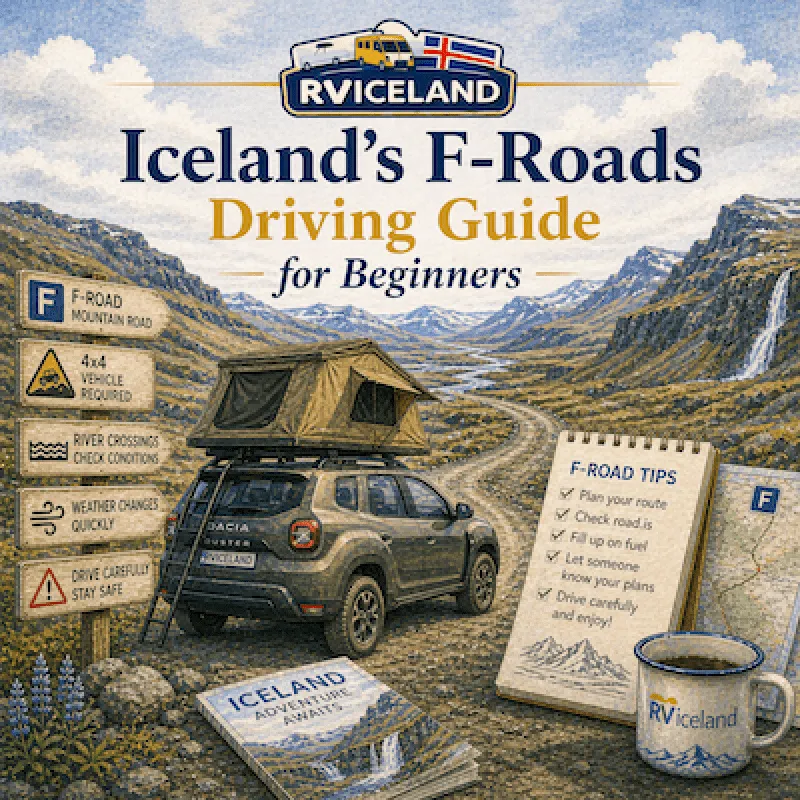
What are F-Roads in Iceland?
F-roads (short for “Fjallvegur,” meaning mountain roads) are rough, unpaved routes that cross Iceland’s remote Highlands. These roads are marked with an “F” before their number (e.g., F35, F208) and are only accessible by 4x4 vehicles. Attempting to drive on an F-road in a 2WD vehicle is strictly prohibited by Icelandic law, resulting in a fine and voiding car rental insurance. Because they are not regularly maintained and due to unpredictable weather, these roads are only open seasonally (typically from June to September).
These gravel tracks often include:
- Steep inclines
- Loose rocks and gravel
- River crossings (sometimes deep and unpredictable)
A 4x4 vehicle is legally required because standard cars cannot handle these conditions, and insurance becomes invalid if you attempt it in a 2WD vehicle.
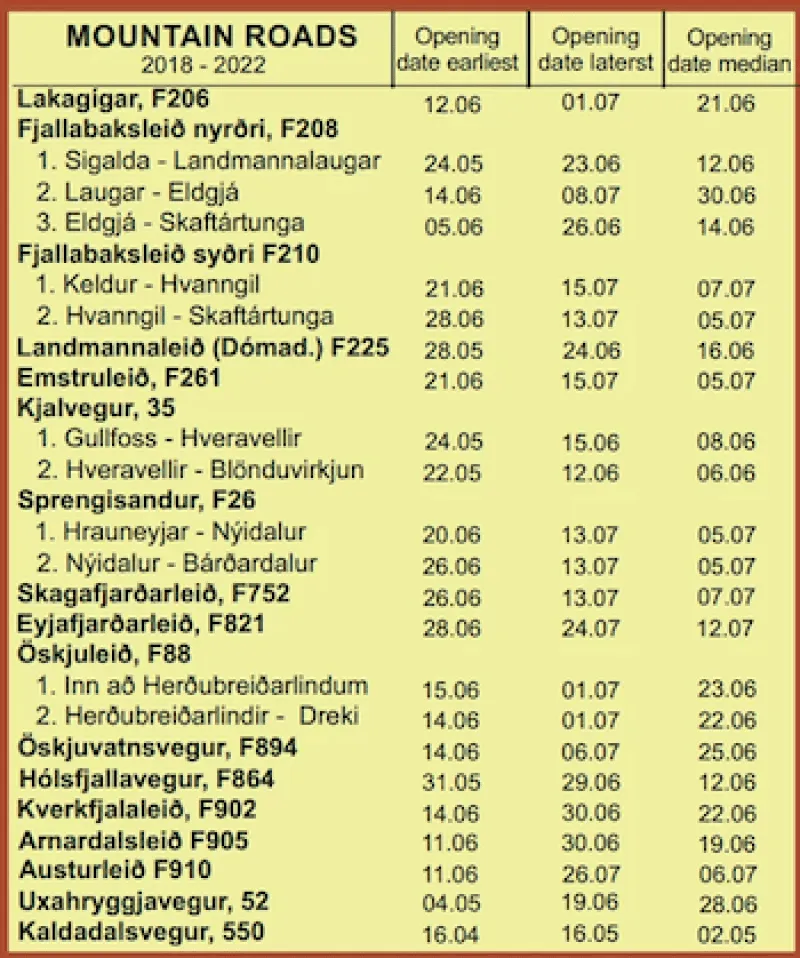
When Do F-Roads Open and Close?
F-roads are typically open only during the summer months, depending on weather and snow conditions.
- Opening: Late June to early July
- Closing: Early September to mid-October
Exact dates vary each year based on snow melt, rainfall, and road safety.
Estimated F-Roads Opening and Closing Times in 2026
| Road | Estimated Opening | Estimated Closing |
| F35 (Kjölur) | Mid-June | Late September |
| F208 (North) | Late June | Mid-September |
| F26 (Sprengisandur) | Early July | Early September |
| F88 (Askja) | Late June | Mid-September |
Note: These are estimates. Always check conditions before traveling.
How to Check Real-Time F-Roads Conditions?
The weather in Iceland can change rapidly, especially in the Highlands. Before heading there and before any journey, always check these resources:
- Road.is: Traffic and road conditions (Icelandic Road and Coastal Administration).
- Vedur.is: Real-time weather, wind, and precipitation forecasts (Icelandic Met Office).
- SafeTravel.is: latest alerts, storm warnings, and travel conditions.
Icelandic Road and Coastal Administration’s color-coded road conditions explained:
- Green: Road is easily passable
- Yellow/Orange: Difficult conditions—drive cautiously
- Red: Road closed (do NOT enter; insurance becomes void)
- Blue/White: Snowy or icy—extreme caution required
Other recommended tools:
- Download offline maps (Maps.me, Google Maps offline)
- Install the SafeTravel app
- Use weather apps with wind alerts
Additionally, make sure to read our guide to Iceland weather alerts to be well-prepared for your trip.
Do You Need a 4X4 for Driving on Highland Roads?
Yes, for both legal and practical reasons. If your itinerary includes Iceland’s Highlands (F-Roads), a 4x4 vehicle is a legal requirement. Under Icelandic law, 2WD vehicles are strictly prohibited from these mountain routes for safety and environmental protection.
A 4x4 camper provides:
- Better traction and clearance
- Safety in rough terrain
- Built-in accommodation for remote areas
Without a 4x4, you risk getting stuck, damaging the vehicle, or voiding your rental insurance.
Scenic F-Roads for a 4x4 Camper Trip
These routes offer some of the most breathtaking landscapes in Iceland.
The F208 North to Landmannalaugar.
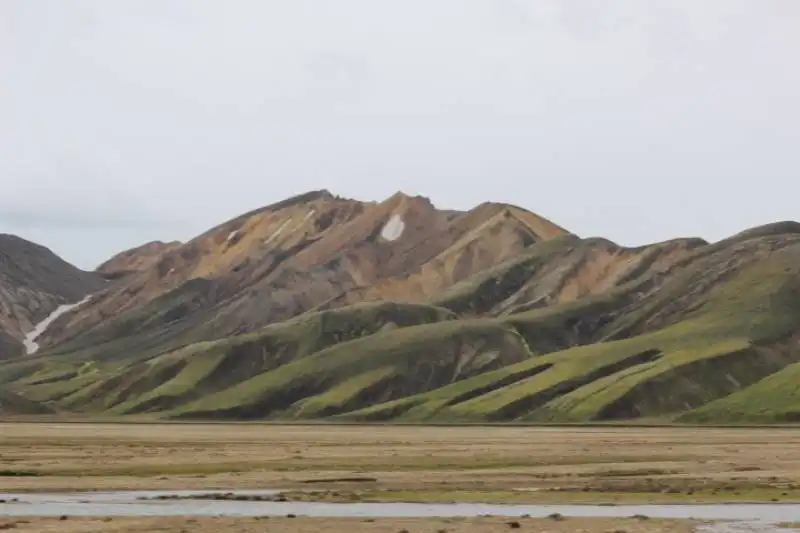
The Northern Route via Road 208 to Landmannalaugar (often referred to as F208 North) is one of the most popular routes in Iceland. This route is a great choice for travelers wishing to experience the beauty of the Icelandic Highlands without the stress of deep river crossings or difficult road conditions.
- Difficulty: Easy to Moderate
- River crossings: None
- Highlights: Colorful rhyolite mountains, lava fields.
The F208 North is considered an easy drive, making it accessible for first-time travelers who are not used to driving on F-Roads.
The F35 (Kjölur)
The Kjölur Route via Road 35 (formerly known as F35) is the primary route connecting North and South Iceland through the Highlands.
- Difficulty: Easy to moderate
- River crossings: None
- Highlights: Glaciers, Hveravellir geothermal area, Kerlingarfjöll mountain range, Hvítárvatn lake and wide-open landscapes.
Route 35 is considered one of the most straightforward Highland drives, making it the perfect entry-level route for beginners wanting a Highlands experience without technical driving.
What You Should Know Before Driving on F-Roads
Preparation is the key to a memorable yet incident-free journey into the Highlands. Always plan ahead and respect nature.
River Crossings
When driving in the Highlands of Iceland, you might end up facing a road that doesn’t have a bridge. River crossings are often a part of driving F-Roads, but they require patience, caution, and the right vehicle.
Keep these tips in mind at river crossings:
- Always stop and assess before crossing
- Walk the river (if safe) to gauge depth
- Never cross if water is fast or above knee level
- Follow tracks of other vehicles
Important: Most rental insurance does not cover water damage from river crossings.
Fuel Strategy
There are no fuel stations in the Highlands.
- Fill up before entering F-roads
- Refuel whenever possible, even if your tank is mostly full
- Carry a fuel can if planning long routes
Packing Supplies
- Bring essentials, including:
- Warm clothing/layers (weather changes quickly)
- Food and water
- First-aid kit
- Offline maps
- Power banks
Note: Mobile coverage is unreliable in remote areas.
Emergency Numbers & Essential Apps
- Emergency number in Iceland: 112
- Use the SafeTravel app to log your trip
- GPS tracker or offline navigation is highly recommended
Can You Camp in the Highlands?
Yes! Camping is a great way to explore the Highlands, but it might require a bit more planning than a standard road trip. Since wild camping is strictly prohibited, you must stay at designated campsites.
Among the most popular campgrounds in the Highlands are Landmannalaugar, Kerlingarfjöll, and Dreki near Askja. Expect basic facilities, so make sure to come prepared and be fully self-sufficient with your own food and water supplies.
The "Golden Rule” of Camping in Iceland:
Here are the basics you should know before your camping trip:
- Wild camping is prohibited
- Camp only in designated areas
- Respect nature and leave no trace
- Avoid disturbing wildlife or other travelers
To be best prepared for your journey, read our comprehensive guide to camping in Iceland.
What to Expect When Camping in the Highlands
- Basic or no facilities
- Harsh weather conditions
- Incredible solitude and scenery
Our Handy Tips for Camping in a Rooftop Tent
- Park facing the wind for stability
- Secure all gear before sleeping
- Use insulated sleeping bags
- Check weather forecasts before setting up
Why Choose a 4x4 With Rooftop Tent for the Highlands?
A 4x4 with a rooftop tent offers the perfect balance between comfort and freedom.
Compared to other options:
- Car + hotels: Less flexible, more expensive
- Ground tent: Less comfortable, weather exposure
- Rooftop tent: Elevated, safer, quick setup
If you’re still deciding, check out our guide on choosing between a camper vs. a hotel in Iceland.
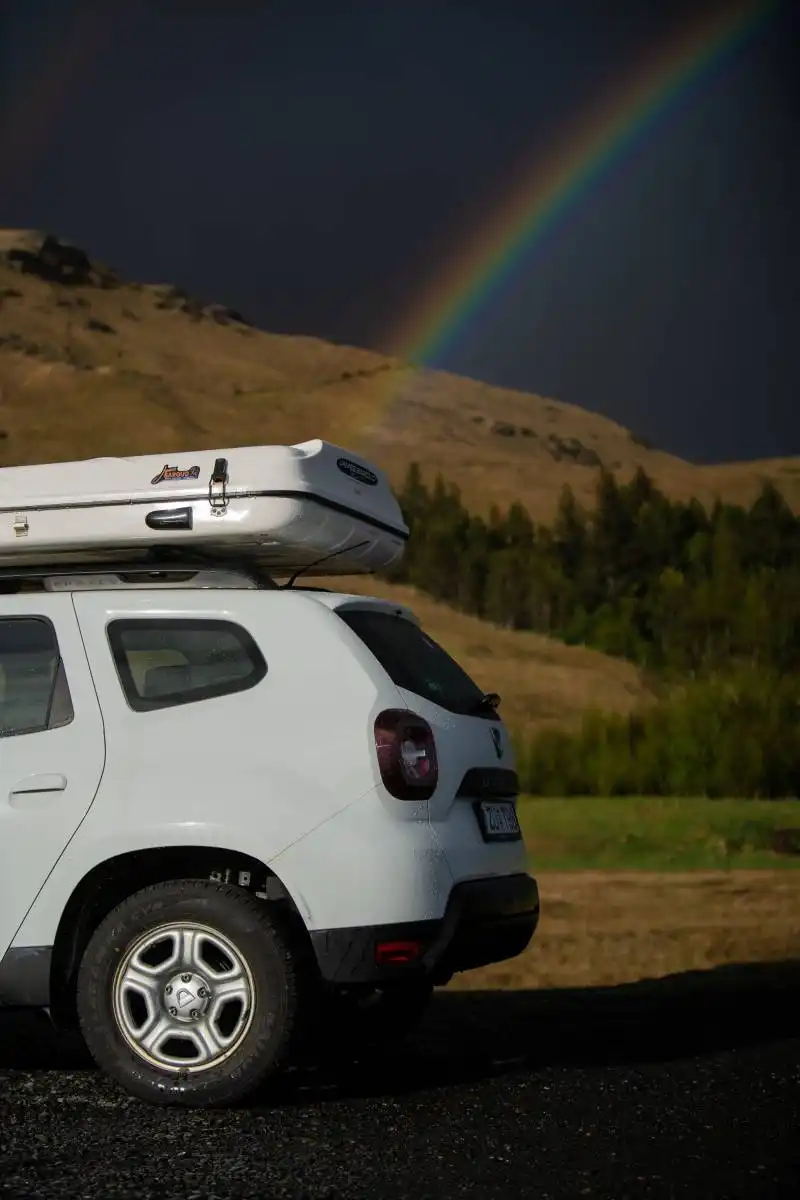
Recommended 4X4 Vehicle for F-Road Driving
Choosing the right rental vehicle is crucial for a safe and smooth journey. Here are some recommended 4x4 roof tent campers for driving Iceland’s F-roads.
The Dacia Duster
The Dacia Duster with roof tent is a versatile and budget-friendly 4x4.
- Comfortable for long drives
- Good ground clearance
- Ideal for most F-roads
The Suzuki Jimny
The Suzuki Jimny (manual) is a compact but extremely capable 4x4. We also offer the automatic Suzuki Jimny for those who prefer a more relaxed drive.
- Excellent for rough terrain
- Lightweight and agile
- Best for adventurous travelers
The Suzuki Vitara
The Suzuki Vitara rental is a comfortable all-rounder.
- Smooth driving experience
- Suitable for moderate F-roads
- Great balance of comfort and capability
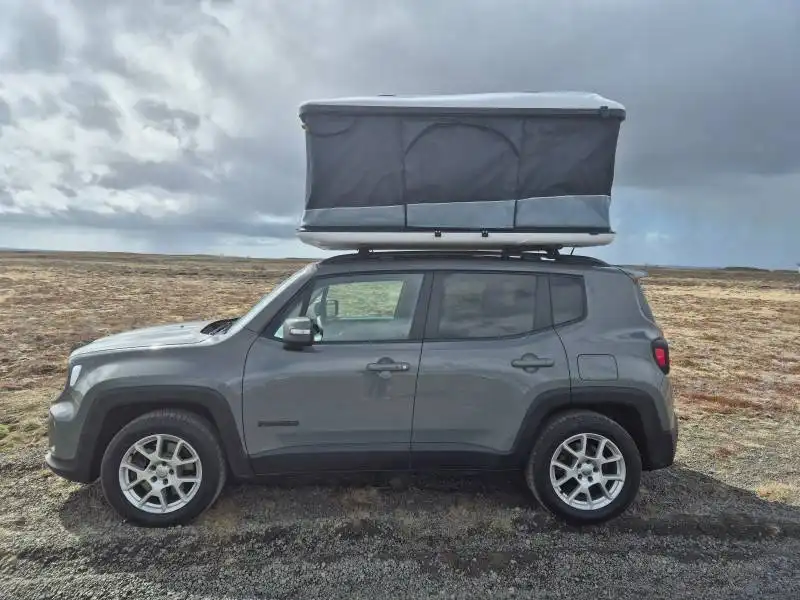
The Jeep Renegade
The Jeep Renegade with a rooftop tent is a rugged and reliable SUV.
- Strong performance on F-roads
- Comfortable interior
- Great for tougher routes
Essential Gear & Insurance for Your Iceland Trip
Preparation ensures safety and peace of mind when venturing into the Highlands.
Packing List for Your Highland Adventure
The Highlands are spectacular, but when it comes to weather, they can also be quite unpredictable. Since there aren’t any convenience stores or gas stations there, it is important to be well-prepared before your trip. Here are some items we recommend having in your packing list:
- Waterproof clothing
- Hiking boots
- Sleeping bag (high rating)
- Cooking gear
- Navigation tools, offline maps and backup paper map
- Headlamp/flashlight
- Emergency kit
- Food and water supplies
Car Rental Insurance
F-road driving comes with risks. We recommend selecting the right rental insurance for your trip. Recommended coverage includes:
- Gravel protection (GP)
- Sand & ash protection (SAAP)
- Super CDW
Please note that car rental insurances in Iceland typically do not cover water damage.
Final Words: Are You Ready for the Highlands?
Driving Iceland’s F-roads is an unforgettable adventure filled with raw landscapes, volcanic terrain, and total freedom. With the right preparation, a capable 4x4 camper, and respect for nature, you’ll experience Iceland at its wildest and most beautiful.
H2: Start Your F-Roads Adventure with RV Iceland
Ready to explore the Highlands? At RV Iceland, we offer fully equipped 4x4 camper rentals designed for F-road travel, giving you the freedom to go further, stay longer, and experience more. Book your vehicle today and start your Iceland adventure the right way.
Frequently Asked Questions
We’ve got answers to some of the most commonly asked questions about traveling on F-roads in Iceland.
No. It is illegal and unsafe. Insurance will be void.
No. Driving off marked roads is strictly illegal and heavily fined due to environmental damage.
Yes. Rooftop tents are safe, stable, and widely used and it is a good rule of thumb to always monitor weather conditions.
Yes. It is strongly recommended to add:
- Gravel protection (GP)
- Sand & ash protection (SAAP)
- Super CDW
These reduce financial risk significantly.