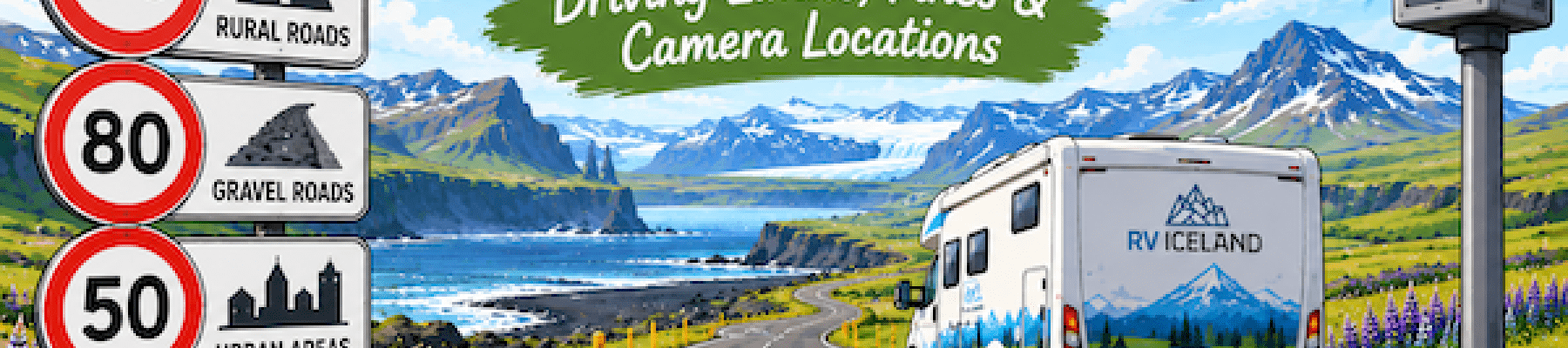
Iceland Speed Limit Rules: Driving Limits, Fines & Camera Locations
Learn Iceland speed limits, speeding fines, speed cameras, F-road rules and driving hazards for a safe Iceland road trip.
Understanding Iceland's speed limits is essential before setting off on a road trip. Although Iceland's roads are often quiet and scenic, the combination of narrow roads, gravel surfaces, sudden weather changes and wandering animals means that driving at the posted speed is only part of staying safe.
The standard maximum speed is 50 km/h in urban areas, 80 km/h on gravel roads outside urban areas, and 90 km/h on paved roads outside urban areas. However, these are maximum limits, not target speeds. Road signs can impose lower limits, and you must always reduce your speed when road, weather or traffic conditions require it.
Standard Speed Limits in Iceland (By Road Type)
Iceland's basic speed-limit system is relatively straightforward. Unless a road sign indicates otherwise, the general limits are:
|
Road type |
General maximum speed |
|
Urban areas |
50 km/h |
|
Residential and other signed urban zones |
Often 30 km/h |
|
Rural gravel roads |
80 km/h |
|
Rural paved roads |
90 km/h |
These are legal maximums. Iceland's road authorities and SafeTravel strongly advise drivers to choose a speed appropriate for the actual conditions, even when the posted maximum is higher.
Urban Areas and Towns (50 km/h & 30 km/h)
The standard maximum speed in built-up areas is 50 km/h, unless signs indicate another limit. Lower limits are common around residential streets, schools and other areas where pedestrian safety is particularly important.
Pay close attention when entering towns. A road that has allowed faster driving in the countryside may quickly transition to a 50 km/h or 30 km/h zone.
If you are driving through Reykjavík or another Icelandic town, look for speed-limit signs rather than assuming that the previous road's speed limit continues.
Rural Gravel Roads (80 km/h)
The general maximum speed on gravel roads outside urban areas is 80 km/h. That does not mean you should routinely drive at 80 km/h on gravel.
Loose gravel can significantly reduce tire grip, particularly where a paved road changes to gravel. Slow down before reaching the gravel transition, and reduce your speed further on bends, potholes, rough surfaces or sections with loose stones.
You may also encounter a lower posted limit, which always takes priority over the general limit.
Paved Rural Highways & The Ring Road (90 km/h)
The standard maximum speed on paved roads outside urban areas is 90 km/h. This includes much of Iceland's famous Route 1, better known as the Ring Road, unless a lower speed is posted.
Even on a straight section of the Ring Road, 90 km/h may be too fast for the conditions. Strong winds, snow, ice, rain, poor visibility, animals and roadworks can all require you to slow down.
Remember: the speed limit tells you the legal maximum but it does not guarantee that traveling at that speed is safe.
Driving Hazards That Require Reduced Speed
Iceland's roads can change dramatically within a short distance. A road that looks easy to drive on a map can have sharp bends, gravel sections, one-lane bridges or limited visibility. The safest approach is to anticipate these changes and slow down before you reach them.
Gravel Road Transitions (Malbik Endar)
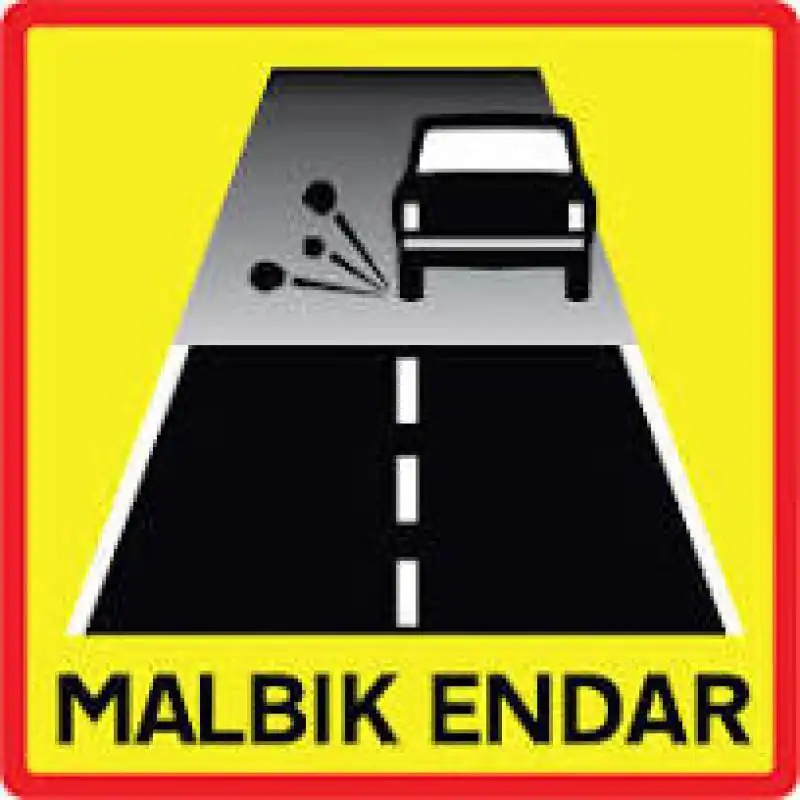
You may see the Icelandic road sign “Malbik endar”, indicating that the paved surface ends and gravel begins.
This is one of the most important places to reduce speed. When your tires move from asphalt onto loose gravel, grip can change suddenly. Braking or steering sharply at too high a speed can cause the vehicle to slide.
Slow down before the asphalt ends, keep both hands on the wheel and avoid sudden maneuvers.
Single-Lane Bridges (Einbreið Brú)
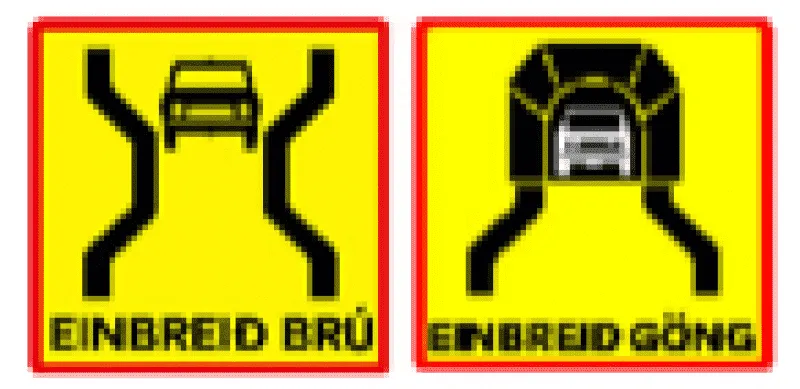
Iceland has many single-lane bridges, including bridges along and away from the Ring Road. The speed limit across these bridges is 50 km/h, and you should slow down well before reaching the bridge.
The vehicle that is closer to the bridge generally has the right of way. However, the safest approach is to slow down, check for approaching traffic and make sure the other driver has seen you before proceeding.
Never enter a single-lane bridge at speed simply because you technically have priority.
H3: Single-Lane Tunnels (Einbreið Göng)
Some Icelandic tunnels have only one lane or sections where traffic shares a single lane. These require extra attention, particularly because visibility can be limited and oncoming traffic may appear suddenly.
Follow all signs and markings inside the tunnel and reduce your speed whenever visibility, road width or traffic conditions require it.
Some Icelandic tunnels also have specific traffic-control systems or priority rules. Never assume that the normal rural speed limit applies inside a tunnel simply because the road outside allows 90 km/h.
Free-Roaming Livestock (Sheep & Reindeer)
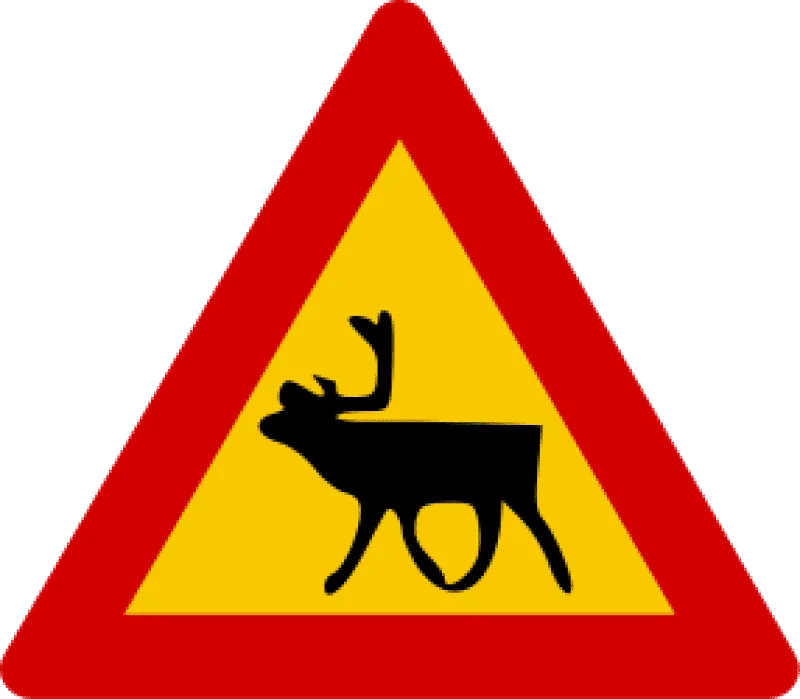
Animals are a genuine road hazard in Iceland. Sheep, particularly during the summer, can wander close to roads and may suddenly move into your path.
If you see sheep near the road, slow down and be prepared for them to move unpredictably. Do not assume that an animal will stay on the roadside.
Reindeer are also found in East Iceland, and drivers in the region should remain alert for them, particularly in areas where warning signs indicate their presence.
F-Road Speed Limits & Highland Driving
Iceland's F-roads lead into the Highlands and are very different from ordinary paved roads. Many are rough, narrow and mountainous, and some include unbridged river crossings.
There is not a separate blanket “F-road speed limit” that means you can simply drive at a particular speed on every F-road. The applicable road signs and general road rules still apply, while your actual speed should be considerably lower whenever the terrain and conditions require it.
In practice, F-road driving is often about slow, controlled driving rather than reaching the maximum legal speed.
Some F-roads require a suitable 4x4 vehicle, while others are only appropriate for larger or specially modified vehicles. Certain roads also contain river crossings that can become dangerous very quickly.
Always check road openings and conditions before heading into the Highlands. Never drive on a closed road, and never attempt an unbridged river crossing if you are unsure it is safe.
Speed Cameras & Traffic Enforcement in Iceland
Speed enforcement in Iceland includes both fixed and mobile equipment. Automatic speed cameras are used in locations where speeding and accidents are considered a concern, and police can also stop drivers directly for speeding.
Rather than trying to identify every camera location, it is safest to assume that speed enforcement can occur anywhere and to follow the posted limit throughout your journey.
Fixed & Average Speed Cameras
Iceland uses automatic speed cameras that photograph vehicles traveling above the applicable limit. The Icelandic Police state that fixed cameras are generally positioned on roadside poles, in road tunnels or at signal-controlled intersections, and that enforcement sections are marked with signs indicating the monitoring.
It is important to distinguish these from average-speed cameras. Iceland's official police information describes automatic cameras that measure a vehicle's speed at a particular location; travelers should not assume that every camera system works as an average-speed system.
Camera locations can change as enforcement priorities change, so relying on an old online list of camera locations is not a substitute for watching the road signs.
Mobile Radar & Unmarked Police Cars
Speed enforcement is not limited to fixed cameras. Icelandic police also use mobile speed cameras, and police may conduct speed checks using both marked and unmarked vehicles.
In other words, slowing down only when you see a speed-camera sign is not a reliable strategy. Follow the speed limit throughout your journey, including on quiet stretches of road where there may appear to be little traffic.
Speeding Fines & Penalties in Iceland
Speeding in Iceland can result in a fine, penalty points and, in serious cases, suspension or loss of your driving licence. The higher the speed above the applicable limit, the more serious the consequences can become.
The exact penalty depends on factors including the applicable speed limit and the speed recorded by enforcement equipment or police.
Overview of Speeding Fine Rates
Iceland's official traffic-fine schedule uses different brackets depending on the applicable maximum speed and the speed recorded.
For example, the official schedule currently lists the following examples for roads with an 80 or 90 km/h maximum:
|
Recorded speed |
80 km/h limit |
90 km/h limit |
|
91–95 km/h |
— |
ISK 20,000 |
|
96–100 km/h |
ISK 50,000 |
ISK 20,000 |
|
101–110 km/h |
ISK 80,000 |
ISK 50,000 |
|
111–120 km/h |
ISK 100,000 |
ISK 80,000 |
|
121–130 km/h |
ISK 130,000 |
ISK 120,000 |
The official fine schedule contains additional brackets, and speeding can also result in penalty points or licence suspension at higher speeds. The government's traffic-fine calculator should be used for the exact current penalty for a particular situation.
How Speeding Fines Are Processed for Rental Vehicles
This is particularly important if you are visiting Iceland in a rental car.
For automatic speed-camera offences, the fine is initially sent to the registered owner of the vehicle. The Icelandic government specifically states that speed-camera fines are sent to the vehicle's registered owner.
For a rental vehicle, this means the rental company may receive the notice and then identify the renter or driver according to the rental agreement and applicable procedures. The rental company may also charge an administration fee where permitted by its rental terms.
If you receive a speeding notice while using a rental vehicle, follow the instructions supplied with the notice and contact your rental company if you need clarification.
How to Stay Safe and Avoid Speeding Fines
The easiest way to avoid a speeding fine in Iceland is also the safest: drive according to the signs and conditions, rather than trying to drive at the maximum possible speed.
Before setting off:
- Check the weather and road conditions.
- Learn the basic Icelandic road signs.
- Allow extra time rather than trying to make up time by driving faster.
- Slow down before gravel-road transitions.
- Reduce speed approaching blind crests, bends, bridges and tunnels.
- Watch carefully for sheep and other animals.
- Follow temporary roadwork and weather-related speed restrictions.
- Never assume a quiet road has no speed enforcement.
- Keep your attention on the road rather than your phone or navigation screen.
- Check whether your planned route is open before entering the Highlands.
Most importantly, remember that 90 km/h is a maximum, not a recommended speed for every situation.
Ready to Explore Iceland Safely?
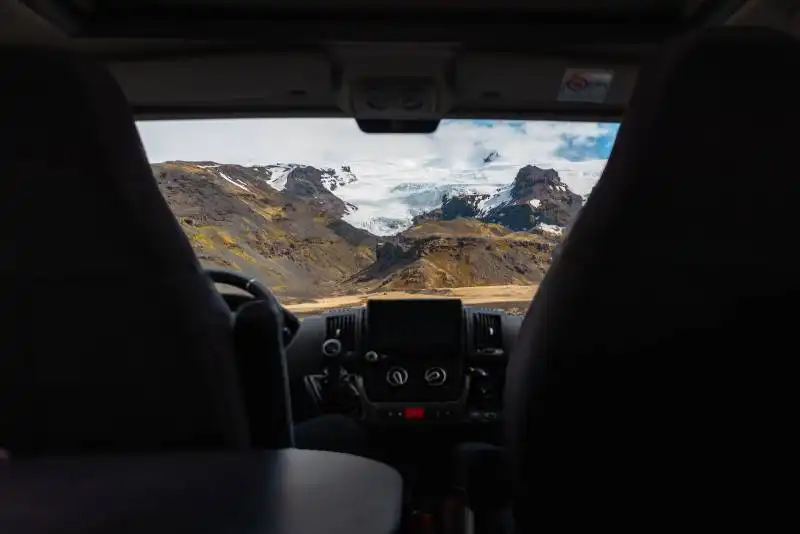
A road trip around Iceland is one of the best ways to experience the country's top waterfalls, black-sand beaches, mountains, glaciers and coastal landscapes. The safest trips are the ones where you have enough time to enjoy the journey without rushing between destinations.
Choose a campervan rental that suits your itinerary, check the road conditions before each day's drive and respect Iceland's speed limits. When conditions deteriorate, slow down, even if the posted limit would technically allow you to drive faster. Take your time, enjoy the scenery and let Iceland set the pace.
Frequently Asked Questions
Have questions about the speed limit rules in Iceland? We have answers to some of the most common questions below.
The general maximum speed is 90 km/h on paved roads outside urban areas and 80 km/h on gravel roads outside urban areas. In urban areas, the standard maximum is 50 km/h, with lower limits such as 30 km/h applying where signs indicate them.
Some roads may have different posted limits, so always follow the signs.
Iceland does not have a single nationwide winter speed limit that automatically replaces the normal limits when winter arrives. However, winter conditions can make the legal maximum speed unsafe. Snow, ice, strong winds, darkness and poor visibility can all require you to drive substantially slower than the posted limit. Make sure to adjust your speed according to the conditions.
Temporary or local restrictions may also apply, so always check current road and weather conditions before driving.
You should not rely on a tolerance margin when driving in Iceland. The official guidance states that exceeding the speed limit is illegal, and Iceland's speed-enforcement system uses measured speeds to determine offences.
Even if enforcement equipment has technical measurement tolerances, this should never be treated as an amount of speed you are legally allowed to exceed. The safest approach is to keep your speed at or below the posted limit.