Common Road and Traffic Signs in Iceland
Planning a self-drive trip to Iceland? Before you hit the road, familiarize yourself with the most common road signs to ensure your journey goes smoothly.
With breathtaking landscapes at every corner, you will find driving in Iceland in a camper to be an unforgettable adventure. To make the most of your journey and approach the roads safely, it’s essential to familiarize yourself with Icelandic road signs.
Icelandic roads are known for being unpredictable; weather can change rapidly, and road conditions range from paved, to gravel roads and mountain tracks, requiring extra caution. Ensure your road trip goes as smoothly as possible by understanding local traffic signs and following essential safety tips.
Key Takeaways
Here are some key takeaways regarding road signage in Iceland:
- Iceland uses the Metric System: All distances are expressed in kilometers and speed limits are in km/h.
- Respect Speed Limits: You’ll find speed cameras all around the country, and police patrols frequently monitor speed limits. Speeding fines are expensive and can significantly impact your travel budget. Always follow the speed limit.
- Unique Signs: Due to Iceland’s unique hazards and conditions, you will find road signs specific to the country. For example, one-lane bridges, blind hills and free-roaming sheep. Make sure to familiarize yourself with these signs before you start your journey.
Understanding Iceland’s Road Signs
Most Icelandic road signs use universal symbols and colors, making them familiar and easy to recognize for international travelers. In this article, we’ll decode the essential types of road signs you need to know to ensure a smooth and safe drive in Iceland.
Speed Signs
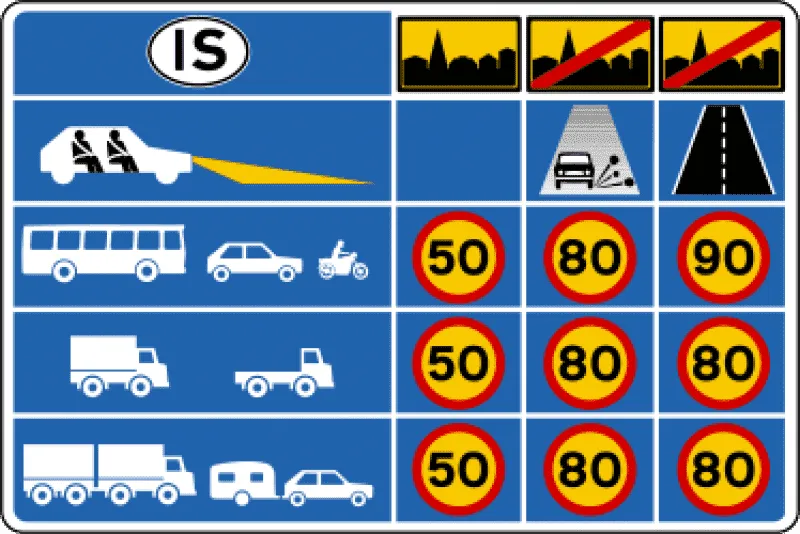
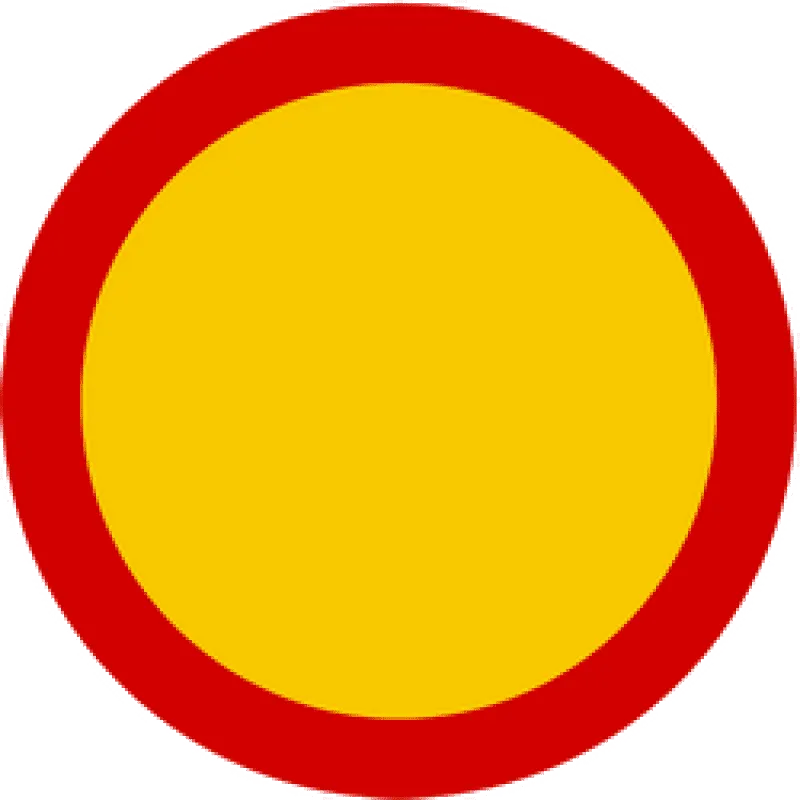
Speed signs in Iceland are quite easy to spot; they are yellow circles with a red border and a black number. Iceland uses the metric system, and all speed limits are indicated in kilometers per hour (km/h). Pay attention to speed limits when driving in Iceland. Speed cameras are found all around the country, and speeding tickets can be quite expensive.
Warning Signs
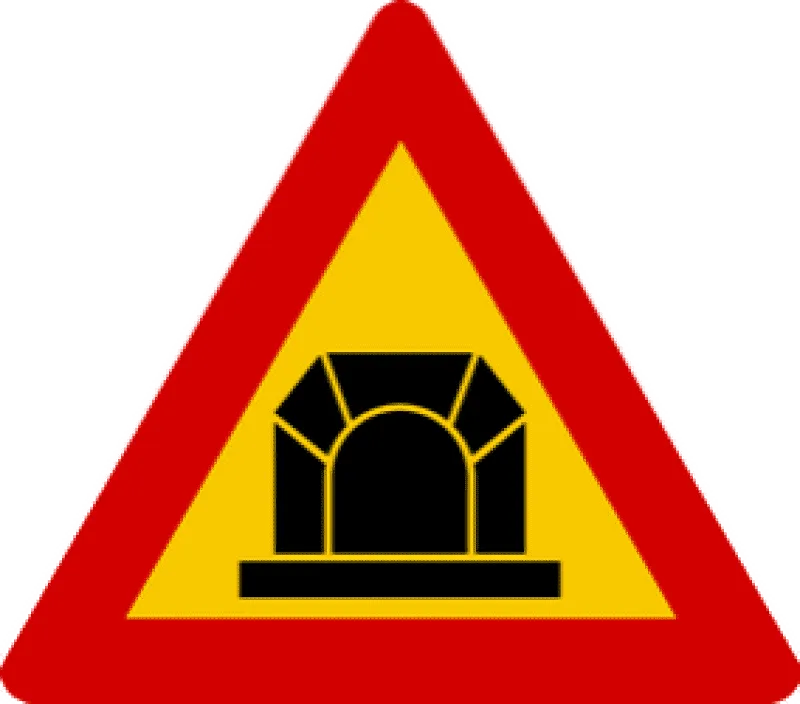
Warning signs are generally indicated by a yellow triangle with a red border. These signs are used to alert you to hazards or changing driving conditions, ranging from loose gravel and strong crosswinds to a tunnel ahead.
Prohibitory Road Signs
Prohibitory signs are used to indicate actions that are forbidden. They generally appear as yellow circles with a red border and feature a symbol in the center to illustrate the restriction. These are usually straightforward and easy to understand and range from prohibited car entry to parking restrictions.
Informational Road Signs
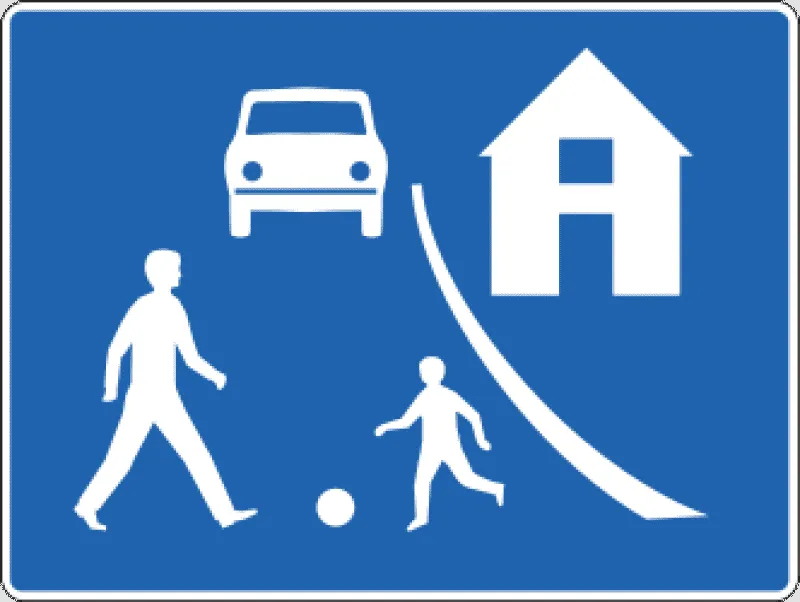
Informational signs provide helpful information about the surrounding area. They are generally blue square or rectangular signs with white text or illustrations.
Road Signs Unique to Iceland
While you will find most road and traffic signs in Iceland straightforward and easy to understand, there are unique hazards in the country that require specific signage. We strongly recommend getting familiar with these.
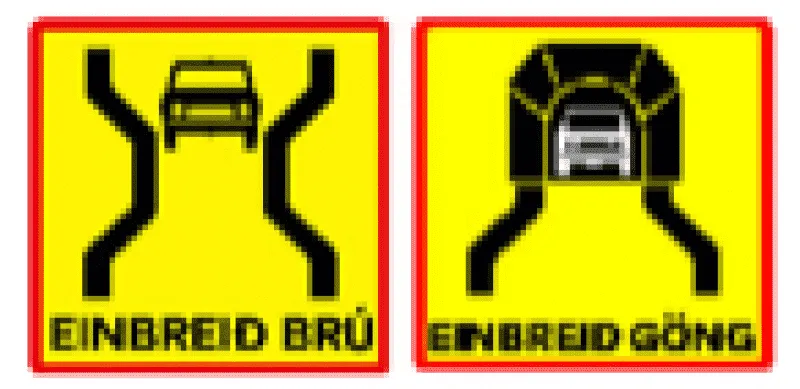
Einbreið Brú (One Lane Bridge)
This sign indicates that the bridge ahead is only wide enough for one vehicle. The rule of thumb is that the vehicle closest to the bridge has the right-of-way. Always slow down and proceed with caution.
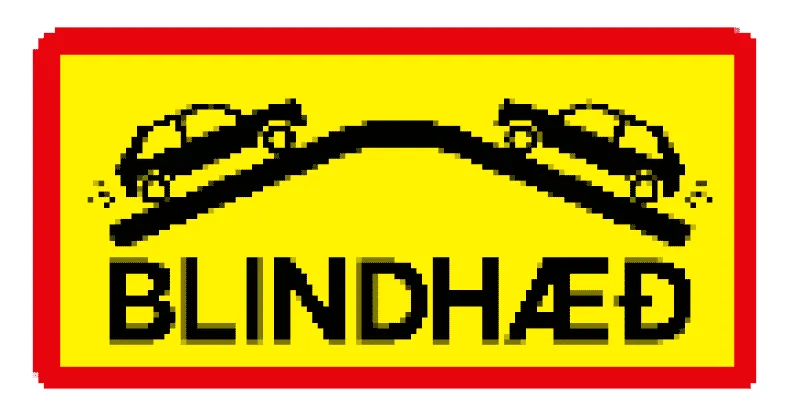
Blindhæð (Blind Hill)
This sign indicates that there is a 'blind hill' ahead, which can sometimes also be a single-lane hill. Drive slowly and carefully.
(Image of the sign)
Malbik Endar (Paved Road Ends)
This sign indicates that the paved road is ending and transitioning into a gravel surface. Be sure to slow down before the pavement ends and continue with extra caution.
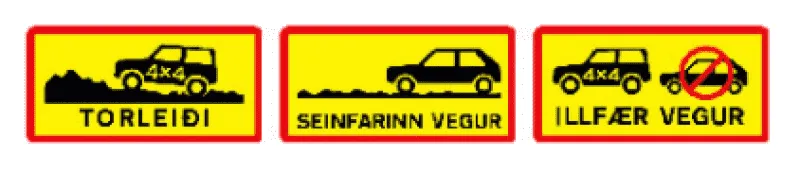
Illfær vegur (Difficult Road)
This sign indicates that the road ahead is potentially dangerous, unsuitable for regular vehicles, and strictly requires a 4x4. These are often seen on F-roads heading to the highlands. Make sure to rent a 4x4 vehicle if you plan on driving these roads. Remember, off-road driving is strictly forbidden in Iceland
Ready for a Safe Road Trip in Iceland?
Now that you know more about the common traffic signs you can expect to find in Iceland, it is time to plan your trip! To help you prepare, we have created a complete guide to camper insurance in Iceland. This will help you navigate the different coverage options and understand the risks specific to Iceland. When you are all set, book your camper rental and hit the road with confidence!