Driving around Iceland in a campervan rental is one of the best ways to explore the country’s landscapes, but it helps to know what to expect when it comes to road tolls and parking fees. This guide covers everything you need to plan a smooth, stress-free road trip.

Are There Road Tolls in Iceland?
For the most part, Iceland’s road network is toll-free. Travelers can drive around the Ring Road and through most major areas without paying any tolls. The only exception is a single tunnel in the north of Iceland, which operates on an automated toll system.
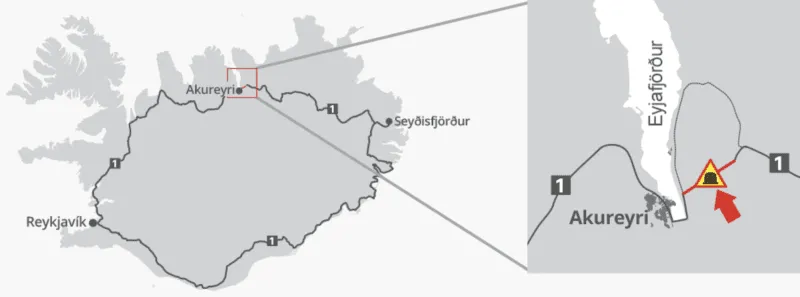
Vaðlaheiðargöng: The Only Toll Tunnel in Iceland
Vaðlaheiðargöng is a 7.5-km tunnel connecting Akureyri and Húsavík, allowing drivers to avoid the mountain pass during winter or reduce their travel time year-round. It is the only road in Iceland that requires a toll payment.
How Much is the Tunnel Fee?
The fee varies depending on vehicle size, but standard passenger cars and campervans generally pay a fixed rate per trip. Expect around 2,110 ISK–2.152 ISK for a single passage when paid online before or shortly after your drive.
How to Pay Vaðlaheiðargöng Tunnel Fee
There are no toll booths. Instead, the tunnel uses license-plate recognition. Drivers must pay digitally on the official tunnel website within a set time window. Simply enter your license plate, choose your payment method, and complete the transaction in a few clicks.
You can visit the official tunnel website: veggjald.is
Or you can download the Veggjald app (Android and iOS)
Do You Need to Pay the Tool With a Rental Car?
Yes. Even if you’re driving a rental car or campervan, it is your responsibility to pay the toll after passing through the tunnel. Some rental companies offer automatic toll registrations, but unless stated otherwise, you should assume you need to pay it yourself.
What Happens if You Forgot to Pay the Tunnel Toll?
If the toll is not paid within the required time frame, an additional service fee is added. Rental companies may also charge an administrative fee for processing unpaid tolls, so it’s best to settle the payment as soon as possible.
Parking Fees in Iceland
Parking fees are common in Iceland’s cities, popular attractions, and natural sites. While many rural areas are free, major towns, such as Reykjavik and Akureyri, use paid parking zones. Always check nearby signs to avoid fines.
Campers Parking Fees & Restriction in Iceland
Campervans often fall under the same parking rates as standard vehicles, but some tourist hotspots charge slightly higher fees for larger vehicles like RVs and motorhomes. Keep in mind that it is illegal to spend the night in your camper outside of designated campsites. If you want to learn the specifics of campervan parking rules in Iceland, see our in-depth guide.
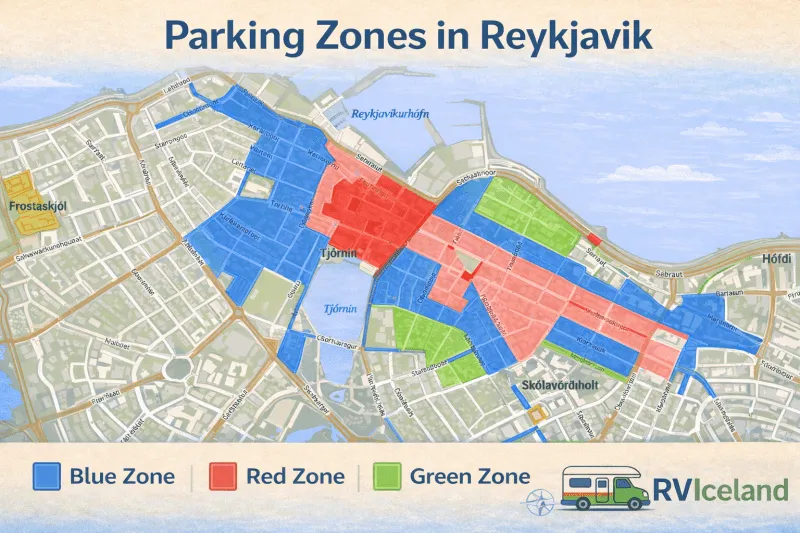
Reykjavik City: Parking Zones & Rates
Reykjavik uses a color-coded system to indicate parking rates and time limits. Central zones (P1 and P2) are the most expensive and have shorter maximum parking durations. Outer zones (P3 and P4) are cheaper and usually offer longer stays. Payments can be made via parking meters or mobile apps.
- P1 (Red and Pink): Most central and most expensive. Costs 4.64 USD (630 ISK)/hour. Parking fees apply from 9 AM to 9 PM on weekdays and 10 AM to 9 PM on weekends. The maximum parking duration is 3 hours.
- P2 (Blue): Costs 1.70 USD (230 ISK)/hour. Fees apply from 9 AM to 9 PM on weekdays and 10 AM to 9 PM on weekends.
- P3 (Green): Costs 1.70 USD (230 ISK)/hour for the first two hours, then 0.52 USD (70 ISK)/hour after that. Fees apply from 9 AM to 6 PM on weekdays.
- P4 (Orange): Costs 1.70 USD (230 ISK)/hour, but fees only apply on weekdays between 8 AM and 4 PM.
Akureyri: Parking Zones & Rates
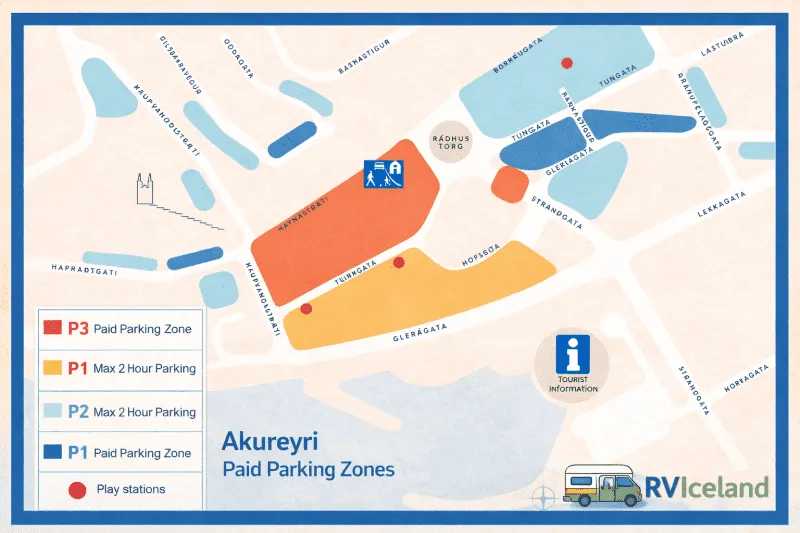
Akureyri offers both free and paid parking depending on the zone. The city center uses timed parking areas where drivers must display a parking disc showing their arrival time. Paid spaces near popular attractions may use meters or digital payments.
Parking at Keflavik International Airport
The airport offers several parking lots with different price levels, from short-stay areas near the terminal to long-term parking farther out. Fees are charged per hour or per day, and pre-booking online can sometimes secure a lower rate.
Entrance Fees for National Parks & Natural Sites
Some national parks and heavily visited natural attractions charge entrance or parking fees to support conservation efforts. Locations like Þingvellir, Skaftafell, and certain canyon or waterfall areas often require paid parking. Fees assist with trail maintenance, safety, and infrastructure.
Recommended Parking Apps for Travelers
Several mobile apps make it easier to pay for parking in Iceland. Popular choices include apps used in Reykjavik and Akureyri that allow you to pay, extend your stay, and monitor your parking session from your phone, such as Parka and EasyPark. Downloading these before your trip saves time and avoids unnecessary fines.
Parking Fines
Parking in Iceland is generally straightforward, but it’s important for campers and RV renters to be aware of local rules, especially in urban areas like Reykjavík or near popular attractions.
Parking fines typically range from 5,000–10,000 ISK, depending on the type of infraction. Common violations include overstaying a paid parking period, parking in restricted zones, or leaving your RV in areas designated for smaller vehicles.
Even when driving a rental, you are responsible for any parking fines issued during your trip. These fines are sent directly to the rental company, and if they remain unpaid, additional administrative fees may be added. Paying them promptly is the easiest way to avoid extra costs and ensure a smooth rental experience.

Finals Words
Making toll payments and parking fees in Iceland may seem confusing at first, but once you understand the basics, they are quite easy to manage. Staying informed and paying any fees or fines promptly ensures a smooth and worry-free RV adventure across the country.
For a safer and more enjoyable journey, we also recommend learning more about local traffic rules, road conditions, and driving etiquette. You can read our comprehensive guide to driving in Iceland to learn more.