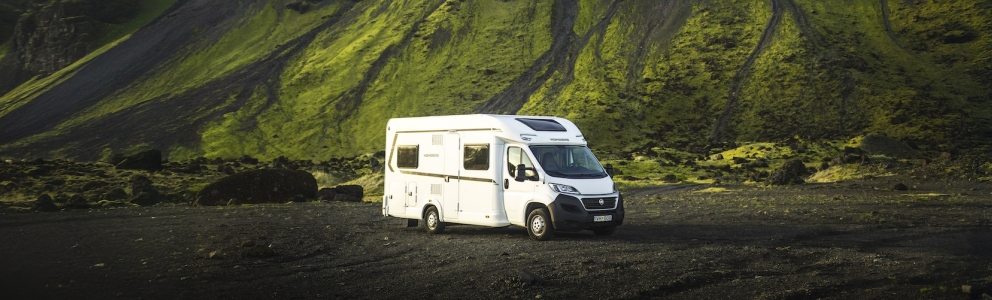
Guide to Driving the Diamond Circle in Iceland
Discover the ultimate self-drive guide to Iceland’s Diamond Circle. Learn about driving distances, must-see attractions, road conditions, campsites, and travel tips for North Iceland.
North Iceland is home to some of the country’s most dramatic landscapes, geothermal areas, waterfalls, volcanic craters, and coastal scenery. One of the best ways to experience this region is by driving the Diamond Circle, a scenic touring route that connects many of North Iceland’s most iconic attractions.
Compared to the more famous Golden Circle, the Diamond Circle feels wilder, less crowded, and more adventurous. Whether you are planning a summer campervan journey or a winter road trip, this route offers unforgettable experiences for nature lovers and self-drive travelers.

What is the Diamond Circle in Iceland?
The Diamond Circle is a popular sightseeing route in North Iceland that connects several major natural attractions along a circular driving route. The loop includes waterfalls, volcanic landscapes, geothermal areas, dramatic canyons, whale watching towns, and national park areas.
The five main highlights of the Diamond Circle are:
- Dettifoss Waterfall
- Ásbyrgi Canyon
- Húsavík
- Lake Mývatn
- Goðafoss Waterfall
The route is especially popular among travelers who want to explore Iceland beyond the South Coast and discover a more remote side of the country.
Where is the Diamond Circle Located?
The Diamond Circle is located in North Iceland and is connected directly to Route 1, Iceland’s Ring Road.
The route begins near Akureyri and loops through the northeastern part of the country before reconnecting with the Ring Road.
Approximate driving distances:
- Reykjavík to the Diamond Circle: around 470 km (292 mi)
- Akureyri to the Diamond Circle: around 90 km (56 mi)
For travelers planning a longer road trip around the Ring Road, the Diamond Circle is one of the best detours in North Iceland.
How Long Does It Take to Drive Around the Diamond Circle?
The full Diamond Circle route is approximately:
- 250–260 km (155–162 mi)
Driving the loop without stopping takes roughly:
- 5–6 hours
However, to properly enjoy the waterfalls, geothermal areas, hiking trails, whale watching opportunities, and viewpoints, most travelers should plan:
- 1–2 full days
Travelers who enjoy hiking, photography, or camping may want to spend even longer exploring the region.
H3: What is the Best Direction to Drive the Diamond Circle?
Most travelers drive the Diamond Circle clockwise from Akureyri toward Goðafoss and Lake Mývatn before continuing toward Dettifoss, Ásbyrgi, and Húsavík.
This direction allows:
- Gradual transition into more remote landscapes
- Convenient fuel and grocery stops early in the route
- Easier pacing for sightseeing
However, the route works well in either direction depending on your itinerary and accommodation plans.
The Diamond Circle vs. The Golden Circle
The Diamond Circle and the Golden Circle are very different experiences.
Golden Circle:
- Located near Reykjavík
- Easier access
- More crowded
- Shorter route
- Famous for Gullfoss, Geysir, and Þingvellir
Diamond Circle:
- Located in North Iceland
- More remote and adventurous
- Less crowded
- More volcanic and rugged landscapes
- Better for longer self-drive road trips
Travelers looking for quieter nature experiences often prefer the Diamond Circle.
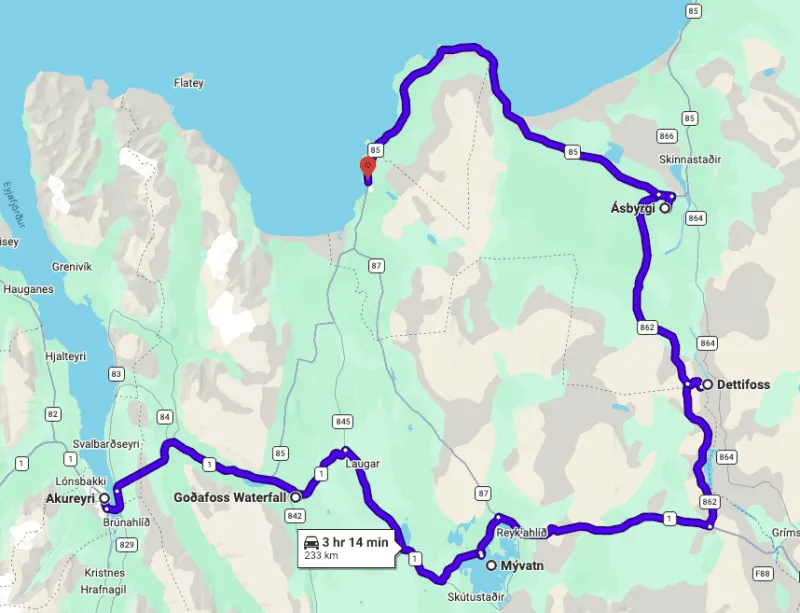
Map of the Diamond Circle
The Diamond Circle follows a loop connecting Route 1 with several regional roads in North Iceland.
Main stops include:
- Akureyri
- Goðafoss
- Lake Mývatn
- Dettifoss
- Ásbyrgi
- Húsavík
Because weather conditions can change quickly in North Iceland, downloading offline maps before your trip is highly recommended.
Driving Distances
Approximate driving distances between major Diamond Circle attractions:
- Akureyri to Goðafoss: 50 km (31 mi)
- Goðafoss to Lake Mývatn: 50 km (31 mi)
- Lake Mývatn to Dettifoss: 70 km (43 mi)
- Dettifoss to Ásbyrgi: 60 km (37 mi)
- Ásbyrgi to Húsavík: 65 km (40 mi)
- Húsavík to Akureyri: 90 km (56 mi)
Road conditions vary depending on season, weather, and road type, so additional travel time should always be expected.
The Top Five Must See in the Diamond Circle
The Diamond Circle is packed with incredible landscapes and natural attractions. These are the five essential stops every traveler should experience.
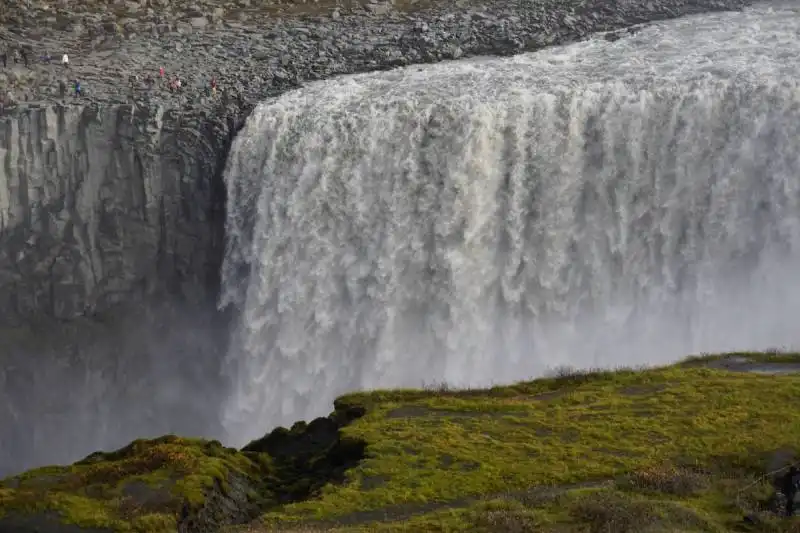
Dettifoss Waterfall
Dettifoss is Europe’s most powerful waterfall and one of Iceland’s most dramatic natural attractions.
The waterfall crashes into the canyon below with immense force, creating powerful mist and thunderous noise. Visitors can access the falls from both the east and west sides.
Things to know:
- Parking areas available on both sides
- Walking paths can be rocky and slippery
- Waterproof clothing is highly recommended
- Facilities vary depending on the side visited
- Recommended visit time:
- 1–2 hours
The east side provides closer views of the waterfall, while the west side offers easier access and better-developed paths.
Ásbyrgi Canyon
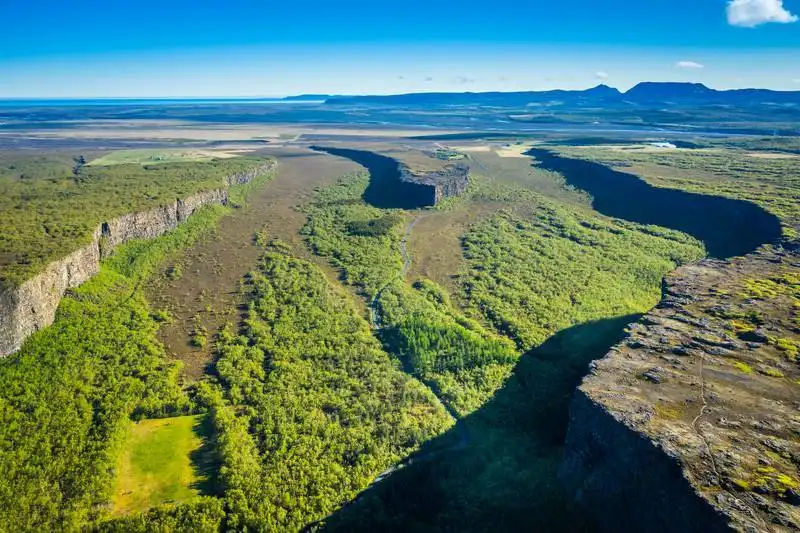
Ásbyrgi is a horseshoe-shaped canyon surrounded by towering cliffs and lush vegetation.
According to Icelandic folklore, the canyon was formed by the hoofprint of Odin’s eight-legged horse, Sleipnir. Today, it is part of Vatnajökull National Park and offers peaceful hiking trails through forested landscapes uncommon in Iceland.
Facilities include:
- Visitor center
- Campground
- Toilets
- Marked hiking trails
- Recommended visit time:
- 2–4 hours
Húsavík
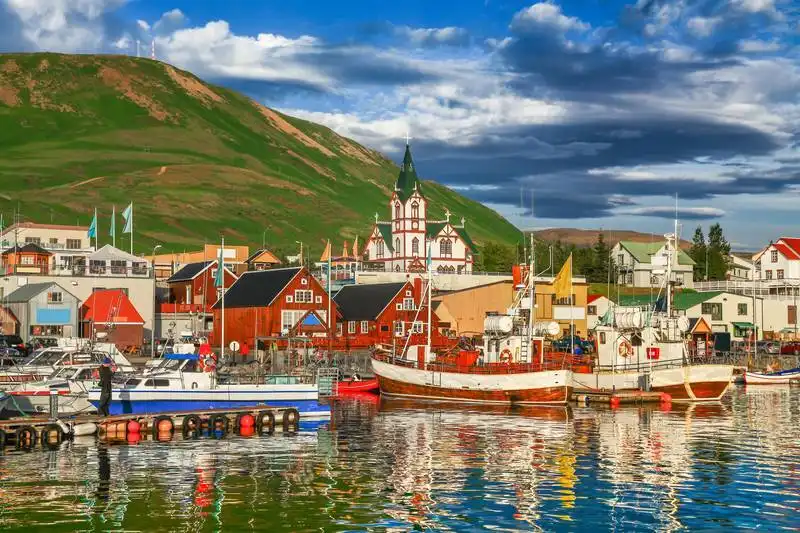
Húsavík is known as Iceland’s whale watching capital.
This charming coastal town offers:
- Whale watching tours
- Geosea geothermal baths
- Cafés and restaurants
- Maritime museums
- Scenic harbor views
Summer is the best season for whale watching, with humpback whales frequently spotted offshore.
Recommended visit time:
- Half day to full day
- Parking and town facilities are easily accessible for self-drive travelers.
Lake Mývatn
Lake Mývatn is one of Iceland’s most geologically active regions.
The area features:
- Volcanic craters
- Lava fields
- Geothermal landscapes
- Birdlife
- Hot springs
Popular nearby attractions include:
- Hverir geothermal area
- Dimmuborgir lava formations
- Grjótagjá cave
- Mývatn Nature Baths
Recommended visit time:
- Full day or longer
The region also offers several campsites, hotels, and restaurants.
Goðafoss
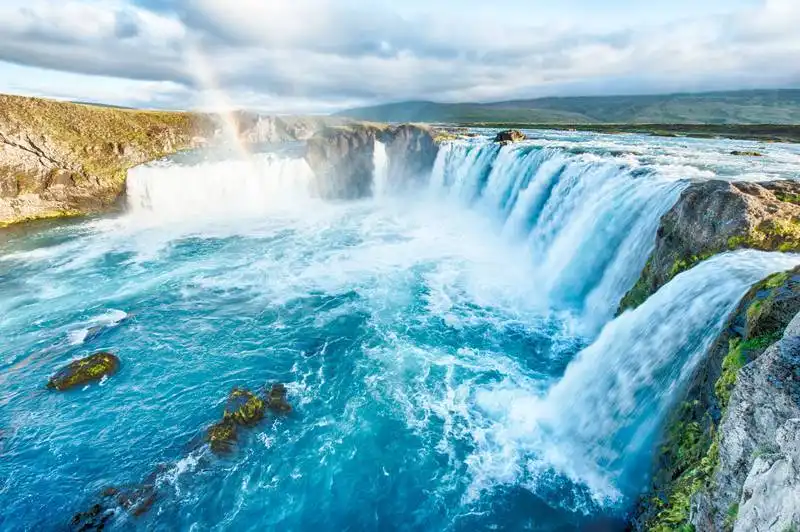
Goðafoss, the “Waterfall of the Gods,” is one of Iceland’s most famous waterfalls.
The waterfall is easily accessible from Route 1 and offers viewing areas on both sides.
West side:
- Easier parking access
- Shorter walk to viewpoints
- More convenient for larger vehicles
East side:
- Different viewing angles
- Often quieter
- Requires slightly longer walking paths
Parking fees may apply depending on the season and parking area used.
Recommended visit time:
- 45 minutes to 1.5 hours
Other Hidden Gems in North Iceland
Beyond the main attractions, North Iceland also offers many lesser-known stops worth visiting during a Diamond Circle road trip.
Krafla Caldera & Víti Crater
The Krafla volcanic area features steaming lava fields, geothermal vents, and the striking Víti crater lake.
Visitors can hike around the crater rim and explore one of Iceland’s most active volcanic systems.
Hverir Geothermal Area
Hverir is a surreal geothermal field filled with:
- Boiling mud pots
- Steam vents
- Sulfuric landscapes
The area feels almost otherworldly and is one of the most unique stops near Lake Mývatn.
Hverfjall
Hverfjall is a massive volcanic crater offering panoramic views over the Mývatn region.
The steep hike to the rim is relatively short but rewarding, especially during clear weather.
Grjótagjá Cave
Grjótagjá is a small lava cave famous for its geothermal hot spring and appearance as a Game of Thrones filming location.
Although bathing is no longer recommended due to fluctuating water temperatures, the cave remains a popular photography stop.
Hljóðaklettar
Hljóðaklettar, or the “Echo Rocks,” features unusual basalt rock formations shaped by ancient volcanic activity.
The area offers scenic hiking trails and quieter nature experiences away from larger tourist crowds.
Hafragilsfoss waterfall
Hafragilsfoss is a powerful waterfall located near Dettifoss but often overlooked by visitors.
The surrounding canyon scenery is spectacular, especially for photographers seeking dramatic landscapes without large crowds.
The Tjörnes Peninsula
The Tjörnes Peninsula offers rugged coastal scenery, birdwatching opportunities, and occasional whale sightings from shore.
It is an excellent detour for travelers wanting quieter roads and scenic ocean views.
Roads and Driving Conditions
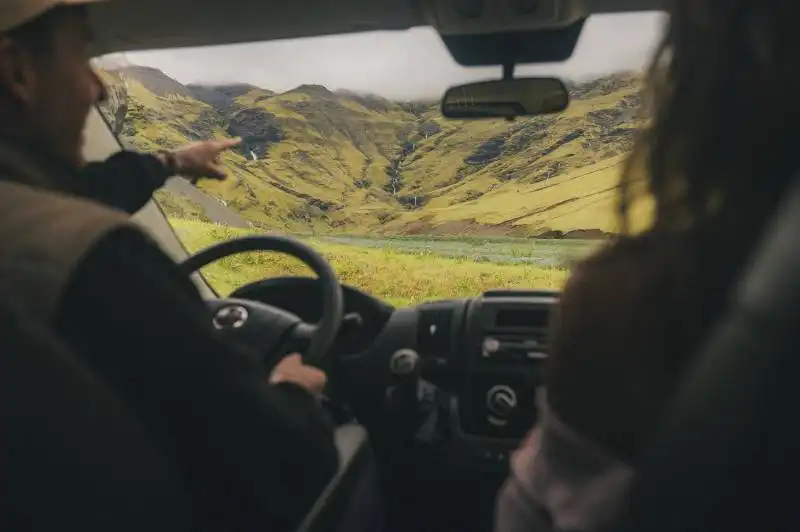
Driving conditions around the Diamond Circle vary depending on season and weather.
During summer:
- Most roads are paved or well-maintained gravel
- Standard vehicles can access most attractions
During winter:
- Snow, ice, and strong winds are common
- A 4x4 vehicle is highly recommended
Important safety tips:
- Check road conditions daily
- Monitor weather forecasts
- Drive slowly on gravel roads
- Watch for sheep near roads
- Carry extra food and water for longer drives
Travelers unfamiliar with Icelandic conditions should prepare carefully before learning how to drive in Iceland safely.
Where to Stay Near the Diamond Circle?
The Diamond Circle region offers hotels, guesthouses, campervan sites, and campgrounds suitable for every travel style.
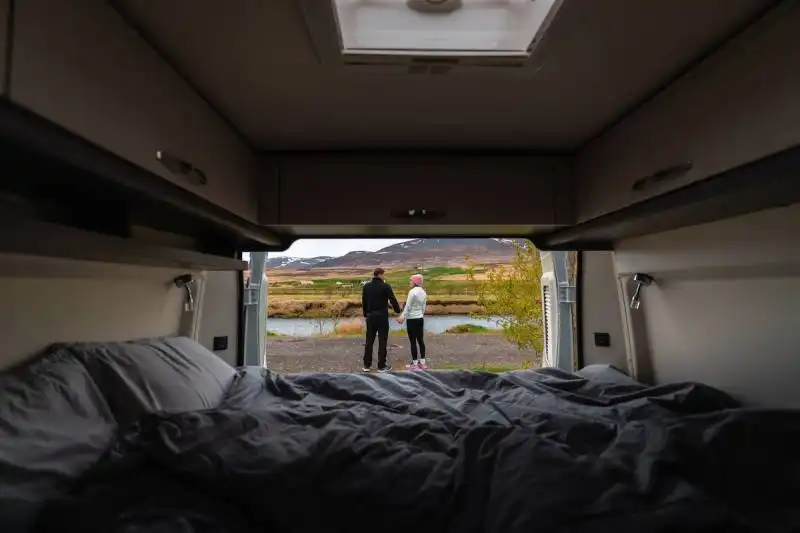
Camping is especially popular because it allows travelers to stay close to nature and explore remote areas more freely. A 4x4 with rooftop tent is an excellent option for travelers wanting flexibility and access to scenic campsites throughout North Iceland.
For travelers interested in an Iceland camping vacation, North Iceland offers some of the country’s most beautiful campground locations.
Ásbyrgi Campground
Ásbyrgi Campground is located inside the canyon area and offers:
- Toilets and showers
- Cooking facilities
- Hiking access
- Peaceful natural surroundings
It is one of the most scenic campsites in North Iceland.
Camping Hamrar (Akureyri)
Located near Akureyri, Camping Hamrar is a convenient base for beginning or ending a Diamond Circle road trip.
Facilities include:
- Electricity hookups
- Kitchen facilities
- Family-friendly areas
- Good access to town services
Husavik Campground
Húsavík Campground is ideal for travelers planning whale watching tours or overnight stays near the coast.
The campground offers:
- Showers and toilets
- Shared kitchen
- Walking distance to town
- Nearby geothermal baths
Start Planning Your Self-Drive Trip to Iceland’s Diamond Circle
The Diamond Circle is one of Iceland’s most rewarding self-drive routes, combining waterfalls, volcanic landscapes, wildlife, geothermal areas, and remote northern scenery into one unforgettable road trip.
Whether you are traveling by campervan or 4x4 rooftop tent, careful planning allows you to fully experience the beauty of North Iceland at your own pace. For travelers building a longer itinerary, this route also fits perfectly into a 10-day road trip around Iceland.
Frequently Asked Questions
Travelers often ask practical questions when planning a Diamond Circle road trip.
While it is technically possible, most travelers will enjoy the route far more over 2 days or longer. A slower pace allows time for hiking, photography, whale watching, and geothermal bathing.
Summer offers the easiest driving conditions, long daylight hours, and access to all attractions.
Winter provides snowy landscapes and possible northern lights opportunities, but road conditions become more challenging.
Some attractions and parking areas may charge small parking fees, especially near major tourist sites. Travelers should carry a payment card or mobile payment method for parking apps and automated payment systems.